digest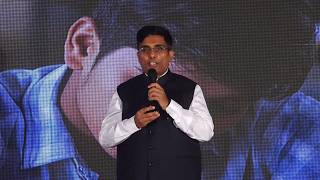
Short Summary
Main recommendation: Shift from linear thinking, where effort reliably produces proportional results, to exponential thinking, which means recognizing compounding, second-order effects, and trend changes and aligning your direction with how the world is actually changing. The speaker argues that advice like "study harder, work more, stay disciplined" was built for a predictable past and can leave young people unprepared for a world where small early differences compound. He presents exponential thinking as the new literacy.
Key Points
- Traditional systems such as schools, exams, career ladders, and parenting advice were designed around linear inputs producing linear outputs, which the speaker says no longer fits a world that changes exponentially.
- Hard work still matters, but on its own it is insufficient. Working hard without alignment to how the world is moving leads to burnout, while aligned effort compounds into far larger impact.
- In the speaker's entrepreneurship example, his company kept adding centers one at a time while a competitor scaled screen to screen, which he interpreted as multiplying growth rather than adding it.
- A classroom example: a disciplined, intelligent student froze on an important exam because the question framing and patterns changed, illustrating that schooling optimizes for mastering patterns rather than recalibrating when they shift.
- Small early advantages or errors now compound into large differences, which the speaker says is the gap between success and failure in many startups and unicorns.
- Institutions such as curricula and policies move over long periods, while technologies like AI change in weeks; the speaker's company began finishing tasks that once took months in weeks and prototyping ideas in days.
Details Worth Noting
- Concrete instructions: The speaker gives no step-by-step method, but his actionable guidance is to evaluate whether your effort is aligned with how the world is changing, not just whether it is hard; to train students to recalibrate when patterns change rather than only to master existing patterns; to focus on sensing compounding effects, second-order effects, and trend direction; and to prioritize better thinking and mental models when using powerful tools like AI.
- The speaker defines exponential thinking as the ability to sense compounding, second-order effects, and trend changes as they occur, and he frames this as the new literacy, with linear thinking as the new illiteracy.
- He says he initially believed in steady growth ("build one center at a time") and only later realized he was still working in a linear manner while the world rewarded exponential systems.
- He states that when AI arrived, he focused on how to use it better rather than whether it would disrupt, because his earlier shift had already prepared his thinking for exponential change.
- He does not provide specific named tools, frameworks, or quantitative data beyond the examples above.
Bottom Line
Effort alone is no longer enough; the advantage now goes to those who sense change early and align their direction with it.