digest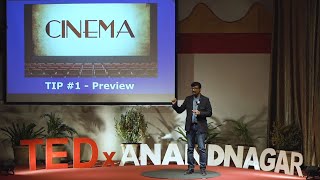
Short Summary
Main recommendation: Read non-fiction books regularly, and train your reading speed and memory with five techniques (preview, pointer guidance, reducing eye fixations, minimizing distractions, and visual memorization) so you can absorb a book's content far faster. The speaker frames this as a path to faster learning, career growth, and success, since "all leaders are readers."
Key Points
- The speaker's core reasons for reading non-fiction: authors condense decades of experience into a roughly 200-page book, and he claims one good book is worth one master's degree in terms of learning.
- An untrained reader is said to read about 200 words per minute; a typical 50,000 to 70,000-word book takes about 4.5 hours at that pace, versus about 1.5 hours at 3x speed.
- He reports that about 25 percent of professionals he has worked with never read a single book after starting their careers, citing four barriers: no time, reading seems hard, reading is seen as only for professional life, and not knowing what to read first.
- He argues there is no "good" or "bad" reader or memory, only trained or untrained ones.
- Memory works best when information is converted into pictures, videos, or emotional scenes, which he compares to how we remember movie plots better than formulas.
Details Worth Noting
- Concrete instructions:
- Preview before reading: handle the book, state why you are reading it, then read the front cover (edition, title, subtitle), the back cover (author information), the introduction, table of contents, preface, each chapter's headings and subheadings, and finally the index. Skim for high-level content rather than word by word, look at any pictures, and look up unfamiliar words in a dictionary.
- Use a pointer to trace the text as you read: your fingertip, a pen or pencil, or a stylus. He says this forces faster eye movement and can capture about 25 percent more content.
- Reduce eye fixations by reading in groups of two, three, or more words instead of word by word.
- Create a distraction-free "focus hour": clear your desk, put away social media, and switch off your phone.
- Improve memory by turning ideas into mental images, videos, or "mind movies" and engaging emotionally with them, as you would while watching a film.
- The speaker says the preview alone lets you understand 15 to 20 percent of the content before reading in depth.
- He says reading 52 books a year is equivalent to 52 master's degrees, a claim presented as his personal experience rather than evidence.
- His own career shift was from IT manager to business coaching and training about four years before the talk; he says reading books helped him learn the new business.
- Reading speed figures and the pointer and fixation claims are the speaker's own statements, though he says most top speed readers follow the pointer method.
Bottom Line
Reading faster is a trainable skill, and combining a structured preview, guided tracking, and visual memory techniques is presented as a practical way to learn more in less time.