 digest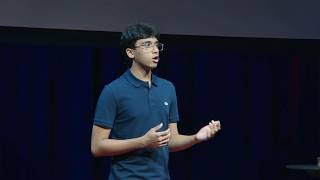
Short Summary
Main recommendation: Treat resilience as "bouncing forward," using hardship to become a new person rather than returning to your old self. Speaker Taran Wadhera argues that setbacks such as moving, feeling isolated, or a community crisis should be met with the expectation of change and growth, not a return to normal.
Key Points
- Neurologist Dr. Sam Goldstein names this idea "bouncing forward," and the speaker contrasts it with Arthur Brooks's "bouncing back" view, which the speaker says misses that resilience should produce someone new.
- Resilience is more than coping: Dr. Kristen Krauss, a public health professor at Rutgers University, reviewed over 20 independent studies and concluded, per the speaker, that resilience is more than coping, and in her analysis of the 2014 Flint water crisis found the best recovery came from community action and collective resourcefulness.
- In Flint, the question residents and groups asked was "how do we change because of this," not "how do we get back to normal." The speaker says the Mott Foundation's long-running programs helped youth and community groups raise over $100 million for victims, economic revitalization, and lasting change.
- Gratitude is the starting point: noticing how much your life has already changed, as the speaker did when moving from California to Chatham.
- Resilience has a health payoff: a Harvard Medical School study of more than 10,000 people found higher resilience scores were linked to a 38% lower chance of death, which the speaker presents as causation.
Details Worth Noting
- Concrete instructions:
- When facing a difficult situation, do not expect everything to stay the same afterward; expect to come out a new, more resilient and adaptable person.
- Take initiative and step onto a positive path, starting with gratitude for what is around you, then look for how your view of yourself is expanding.
- Look for new aspects of life you have gained, rather than focusing only on what was lost (the speaker's example: noticing new experiences like snow, city trips, and trains after moving).
- In a crisis, act collectively in your community and ask how to change because of the event rather than how to return to normal.
- Treat discomfort and feeling out of place as an opportunity for growth, as the speaker's parents taught.
- The speaker's own example: a first day at a new high school, after moving across the country, where a group refused to let the speaker sit with them, leading to skipped lunch that day, but a return to school the next day.
- The Rubik's Cube analogy: problems are solved by working through the mess and learning new patterns, not by undoing every move.
- The Harvard study figure (38% lower chance of death) is reported by the speaker as a correlational finding that he interprets as causal; this is his claim, not verified medical fact.
Bottom Line
Resilience, as presented here, is about being changed by adversity and growing into a stronger, more adaptable version of yourself, rather than simply recovering.


