digest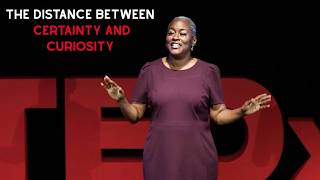
Short Summary
Main recommendation: Replace unexamined certainty with curiosity by running through the five-step DANCE framework (Dig a little deeper, Ask a better question, Navigate possibility and risk, Choose with confidence, Experience the difference) before important decisions. The speaker frames the "intelligence gap" as the distance between what we know and what we are still willing to discover, and argues that the biggest mistakes are avoided by people who interrupt certainty before it becomes a blind spot.
Key Points
- The speaker's central metaphor: a stool collapsed under a pianist at an audition because both the speaker and the pianist assumed it was safe and never asked whether it should be checked.
- Certainty answers "What do I know?" while curiosity asks "What might I be missing?" Certainty gives a place to stand; curiosity gives a direction to move.
- The danger is not certainty itself but certainty that stops asking, such as meetings where people nod without truly agreeing.
- Teams that avoid major mistakes are not necessarily the smartest; they are the ones who interrupt certainty early.
- DANCE is presented as a tool to run through mentally in the time it takes to walk into a meeting.
Details Worth Noting
- Concrete instructions:
- Dig a little deeper: when something is not working, look below the surface, since a performance problem may actually stem from overwhelm, unclear expectations, or missing training.
- Ask a better question: beyond "Will this work?", ask what you might be assuming, what may have changed, and what might be missing.
- Navigate possibility and risk: ask both what could go right and what could go wrong, holding both at once; the goal is not eliminating risk but keeping one fear from blocking the bigger picture.
- Choose with confidence: once you have enough information and understand the risk, make the decision and move forward, since standing still is also a decision.
- Experience the difference: watch what happens after the decision, treating the outcome as new information for the next decision so curiosity becomes a habit.
- For a personal check, pick one pending decision (an avoided conversation, a repeated business approach, or a long-standing habit) and ask, "What might I be missing?"
- The speaker has taught dance for over four decades, to thousands of students in more than 40 countries, and has worked as an engineer, executive, and AI financial protection consultant.
- The speaker explicitly says DANCE does not guarantee perfect decisions and that errors can still occur even after checking.
- The talk describes common patterns of the intelligence gap: teams repeating last year's process, leaders withholding questions out of fear of looking unsure, and groups where everyone sees warning signs but no one speaks.
Bottom Line
Certainty is useful for moving forward, but it should be periodically questioned, and DANCE is offered as a simple, repeatable prompt for doing so before a decision hardens into a blind spot.