digest
Short Summary
Main recommendation: Anchor your learning in what you personally care about, treating AI and new tools as a local, personal story rather than a global one to wait out. The speaker argues that curiosity, experimentation, and connecting ideas across domains matter more than trying to predict which skills will be worth knowing years from now. Learning is framed as a source of joy and personal empowerment, not a task made obsolete by automation.
Key Points
- Uncertainty paralysis and option overload both cause people to stall, leading them to stick with the status quo, which limits future choices.
- Truths tend to be self-consistent: an idea that holds up when approached from multiple angles is more reliable to build on.
- Students split into two groups: one losing motivation as tasks become automatable, another using technology to interrogate ideas, visualize hard concepts, and ask what-if questions across fields.
- The speaker suggests that when feeling overwhelmed, narrowing to a question you already care about works better for him than the common advice to "just start anywhere."
- Doing good work can feel less worth the struggle when an external tool does it faster or cheaper, which the speaker says is a real source of discouragement.
Details Worth Noting
- Concrete instructions: When overwhelmed, do not start anywhere. Instead, ask yourself: What is something right now that I care about? What do I want to learn about? Then, frame AI as a local story by listing the things you care about, the problems you want to solve, the curiosities you want to explore, and the things in your home, personal life, business, or local community you would like to build a solution for, even if feasibility is unclear. Use the tools to interrogate what you are learning, visualize difficult concepts, and connect different domains of knowledge through what-if questions.
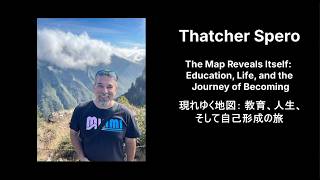
- The speaker's own example: a teacher since 2009 who admits uncertainty about which skills will matter in four years, and who notes that the same uncertainty affects parents advising children and professionals deciding what to level up.
- The speaker ties the "truths are self-consistent" idea to building a foundation of knowledge over time, drawing on many sources rather than a single authority, a lesson he traces back to his mother telling him at age six that books and teachers can both be wrong.
- The closing reframes the opening memory: "a new year is coming" is treated as a metaphor for a time of change, with the speaker encouraging the same questioning drive he had at three years old.
Bottom Line Stop waiting for the "right" skill to reveal itself; start with a personal question you care about and let curiosity and experimentation guide what you learn next.