 digest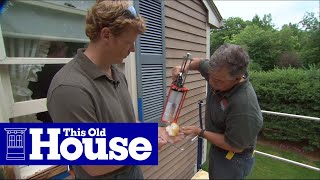
Short Summary
Main recommendation: Repair rotted wood by grinding out the rot to solid wood and filling the area with two-part epoxy, rather than replacing the whole sill or cutting in a wood patch. The epoxy is shaped to the original profile using a traced template, then left to cure overnight before sanding, priming, and painting.
Key Points
- The video compares three options for rotted sills: replacing the entire sill, cutting out the rotted section and inserting a wooden patch, or using epoxy to rebuild the rotted area.
- Epoxy will not bond to rotted wood, so all soft, rotted material must be ground out down to solid wood first.
- A bonding agent is applied to the wood before the epoxy so it adheres better.
- Two-part epoxy flexes with the wood as it expands and contracts, which the host says keeps it from separating.
- The host demonstrates the method on a rotted mullion post at a front door and on a rotted window casing and sill on the second floor.
Details Worth Noting
- Concrete instructions:
- Use a router with a V-shaped grinding bit to grind out all rotted wood until solid wood is reached.
- Scrape off all old paint so the epoxy can stick to the wood.
- Apply a bonding agent to the exposed wood.
- Make a template by holding material under the casing and tracing its perimeter, then cut the pattern out with snips to match the profile.
- Use a two-part epoxy kit (epoxy A and B) loaded into a dispensing gun, which releases the correct ratio when squeezed.
- Mix the two parts together; the working time is about 30 minutes.
- Mix on a piece of Lexan as a palette, since epoxy does not stick to it.
- Press the epoxy into the prepared area, slide a scrap piece of wood under the sill to set a straight bottom edge, fill voids with a knife, then shape the detail using the template.
- Let the epoxy cure overnight, then sand, prime, and paint.
- The method is shown partway through a repair, so the full sequence is covered by the steps above.
- Epoxy is the third option presented, alongside full replacement and wood patching.
- The video does not specify the epoxy brand or cure time beyond overnight.
Bottom Line
Epoxy repair is presented as a practical alternative to replacing rotted trim, provided all rot is removed to sound wood and the epoxy is shaped and cured before finishing.


