digest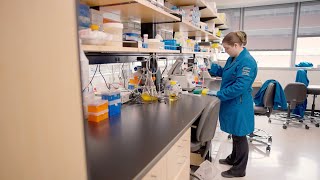
Short Summary
Main recommendation: UCLA Health presents CAR T-cell therapy, an engineered immunotherapy in which a patient's own T-cells are modified to find and kill cancer cells, as a promising treatment that it is steadily improving with additional drugs and immunotherapies. The speakers say the program has treated hundreds of patients over roughly eight years, with the goal of long-term remissions and, in some cases, cures.
Key Points
- CAR T-cells are made by taking a patient's T-cells, a type of immune cell, and modifying them so that when they are returned to the body they can locate and kill cancer cells on contact.
- The therapy does not depend on the patient's own immune system; it relies on the engineered immune cells created for the patient.
- UCLA describes a "bench-to-bedside and back-again" approach, linking laboratory research in immunology, engineering, and translational medicine with clinical care.
- The Jonsson Comprehensive Cancer Center helps coordinate different parts of the campus so new laboratory technologies can reach patients more efficiently.
- The speakers say UCLA offers some CAR T-cell therapies not available anywhere else in the world.
- Care is framed as holistic, with attention to supportive care alongside the cure goal, so patients feel they were well looked after.
Details Worth Noting
- Concrete instructions: The transcript gives no step-by-step, dosing, timing, or preparation instructions for patients or viewers. Its only actionable-level content is the description of the treatment process itself: collect the patient's T-cells, engineer them, and reinfuse them so they target cancer cells.
- The program began about eight years before the video, starting with a first patient treated for B-cell lymphoma.
- The speakers say later progress comes from adding "layer by layer" supporting drugs and additional immunotherapies intended to make treatment more effective and safer and to extend it to more cancer types.
- The speakers acknowledge that there will be "ups and downs" and that patients will need other types of support during treatment.
- The speakers state that some patients are being cured, and they aim to increase that number; they also describe the work as ongoing, with no claim that all patients benefit.
Bottom Line
CAR T-cell therapy is presented as a personalized, still-evolving treatment that UCLA hopes will move from promising results toward more cures, while the speakers stress that not all patients benefit yet.