 digest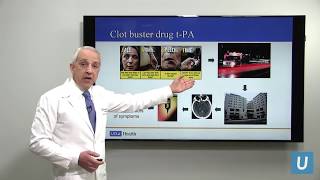
Short Summary
Main recommendation: Recognize stroke symptoms immediately using FAST (Face, Arm, Speech, Time) and call 9-1-1 right away, because treatment for ischemic stroke works best when started as quickly as possible. The video explains that endovascular treatment, a catheter-based procedure that removes the blood clot, can be used up to 6 to 8 hours after symptoms begin, and sometimes up to 24 hours, but earlier treatment gives a better chance of full recovery.
Key Points
- Ischemic stroke, the majority of strokes, is caused by a blockage in a brain blood vessel, usually a blood clot, that deprives part of the brain of oxygen and nutrients. Hemorrhagic stroke, about 15% of strokes, is caused by a burst blood vessel and bleeding in the brain.
- For about 20 years (from 1995 until around 2015), the only approved ischemic stroke treatment was the clot-busting drug tPA, which must be given within about 4.5 hours of symptom onset.
- Endovascular treatment, first shown to benefit ischemic stroke patients around 2015 (about three years before this talk), threads a catheter from the leg artery into the brain to grab and pull out the clot with FDA-approved devices.
- Clinical trial data cited in the video shows the chance of a good outcome drops as treatment is delayed: about 80% recovery when treated within 3 hours versus about 60% at 5 hours.
- Most treatment delay comes from recognizing symptoms and calling 9-1-1, since people having a stroke may find it hard to make the call themselves.
Details Worth Noting
- Concrete instructions:
- Learn the FAST signs: Face (uneven face), Arm (weak or paralyzed arm), Speech (strange speech or trouble speaking or understanding), Time (call 9-1-1 and get to the emergency room right away).
- Call 9-1-1 immediately when stroke signs appear; do not wait, and have family or bystanders call if you cannot.
- Ambulance crews can alert the hospital en route, so specialists can meet the patient at the emergency room on arrival.
- Symptoms depend on the affected brain area: injury to the area controlling strength causes weakness or paralysis, sensation loss causes numbness, and vision or speech problems can also occur.
- The example patient had a middle cerebral artery blockage causing right-sided paralysis and numbness, inability to speak, and partial blindness; the speaker said treatment restored blood flow and the patient walked out of the hospital within a few days.
- Imaging (MR and CT) is required before treatment to distinguish ischemic from hemorrhagic stroke, since clot-busting drugs must not be given for bleeding strokes, and to estimate how much brain tissue is already damaged versus at risk.
- UCLA Medical Center is described as a comprehensive Stroke Center, staffed 24/7, 365 days a year, with more than 40 members.
Bottom Line
Stroke is a medical emergency, and faster recognition and a call to 9-1-1 are the biggest factors in whether treatment can restore brain blood flow and preserve recovery.


