 digest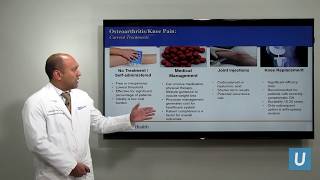
Short Summary
Main recommendation: Genicular artery embolization, a minimally invasive, image-guided outpatient procedure, is presented as a treatment option for knee osteoarthritis pain in people who have not responded to conservative care or repeated joint injections. The speaker, an Interventional Radiologist at UCLA, describes it as sitting between joint injections and knee replacement surgery, with the goal of slowing the inflammation driving cartilage and meniscus breakdown.
Key Points
- Joint injections (steroid or viscous supplementation) are often temporary, and pain can return after weeks or months, so repeated injections may eventually stop working.
- The speaker frames osteoarthritis as a cycle where enzymes such as VEGF and interleukin released from cracking cartilage drive inflammation, which causes further breakdown.
- In a Japanese study by Dr. Okuno and colleagues (published July 2017), 72 patients with 95 knees who had failed conservative therapy, including joint injections, were treated from 2012 to 2016.
- Reported results in that study showed sustained improvement in WOMAC scores through 2 years, with about 85% clinical success in mild-to-moderate pain and about 70% in severe pain, and few patients still needing knee medication at 12 months.
- The speaker presents the procedure's advantages as a standardized Interventional Radiology platform, low side-effect rates, short downtime, and no stitches.
- UCLA is running a single-center prospective trial, approved by the FDA and the UCLA institutional review board, aiming to enroll 40 patients (20 with moderate and 20 with severe pain).
Details Worth Noting
- Concrete instructions: The video does not give home-care or self-administered steps for the procedure itself. It describes what the procedure involves: an outpatient visit of about 2 hours with conscious sedation through an IV (no general anesthesia), a local numbing anesthetic at the groin fold, a small catheter (about the size of spaghetti) guided by X-ray into the knee arteries, contrast injection and angiogram, and injection of roughly 100-micron particles into the artery feeding the inflamed area. Patients usually walk within 2 to 3 hours and resume normal activities the next day. For people considering it, the speaker advises trying joint injections first, since they are a good first or intermediary step, and this procedure targets people who have failed or are resistant to them.
- Pain was measured with the WOMAC Pain Scale, a 96-point scale; the featured patient dropped from 56 to 26 two weeks after the procedure.
- The procedure was described as also being feasible for shoulder and elbow arthritis, though experience there is still early.
- Contact for questions: the speaker invited viewers to email directly (address provided in the original video) or call the office for a phone conversation or in-person appointment.
- The featured patient was 89 years old, and the speaker noted that results are reported from specific study populations; the presentation is educational and not professional medical advice.
Bottom Line
Genicular artery embolization is presented as a newer, minimally invasive option for knee arthritis pain that may suit people whose joint injections have stopped working and who are not ready for or suited to knee replacement, with evidence the speaker describes as sustained over two to three years.


