digest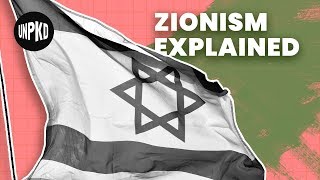
Short Summary
Main recommendation: Zionism should be understood as a broad, multi-strand movement rooted in the Jewish people's ancient, continuous connection to the land of Israel, which the video argues culminated in the modern State of Israel as the expression of Jewish self-determination across political, religious, cultural, and social forms. The video traces this from biblical and exile-era longings through 19th-century migrations and organized political Zionism led by Theodor Herzl.
Key Points
- Zionism did not begin with Theodor Herzl; the video frames its roots as the Jewish connection to the land of Israel, which it says has been central to Jewish identity for at least 3,000 years.
- Jewish return was sustained during roughly 2,000 years of exile through prayer, festivals, liturgy, and rites tied to Israel, such as the "next year in Jerusalem" call at Passover and the glass breaking at Jewish weddings.
- Small-scale aliyah (immigration to Israel) by figures such as Nahmanides, the Kabbalists of Tzfat, Hasidic settlers, and disciples of the Vilna Ga'on preceded organized Zionism.
- Four or more distinct strands emerged in the 19th century: political Zionism (Leon Pinsker and Hovevei Zion), religious Zionism (Mizrachi), cultural Zionism (Ahad Ha'Am), and labor/socialist Zionism (leading to the early kibbutz movement).
- Theodor Herzl's 1896 book Der Judenstaat and the First Zionist Congress unified these movements under a single organization, and the 1917 Balfour Declaration backed a national home for the Jewish people in Palestine.
Details Worth Noting
- Concrete instructions: The video gives no step-by-step instructions, checklists, or actionable advice for individuals; its guidance is historical and conceptual, presenting Zionism as an umbrella encompassing political, religious, cultural, and social expressions rather than a set of actions to take.
- Leon Pinsker's 1882 pamphlet Autoemancipation argued that antisemitism ("Judeophobia") would not be solved by political status or equal rights alone, but by a sovereign Jewish state.
- Ahad Ha'Am's 1888 essay Lo Zu Haderekh ("This Is Not the Way") criticized practical Zionism and mass immigration, and objected to the movement's dismissal of the Arab population already in the land.
- The Vilna Ga'on's disciples (over 500 in the early 19th century) and Rabbi Menachem Mendel of Vitebsk with about 300 followers (1777) are cited as early practical settlers.
- Chaim Weizmann, who the video says secured the Balfour Declaration after more than a decade of effort, was advised by his mentor Ahad Ha'Am during the negotiations, which the video presents as cultural Zionism merging with political Zionism.
Bottom Line
Zionism, as the video presents it, is a plural movement whose unifying thread is the Jewish people's enduring connection to the land of Israel, realized politically through the modern State of Israel.