digest
Short Summary
Main recommendation: Visit the Chernobyl exclusion zone and Pripyat to see how a nuclear disaster site and an abandoned town look about three decades after the 1986 meltdown, while respecting that the area is still radioactive. The video is a guided visual tour of the reactor's sarcophagus, the abandoned town, and the surrounding forest, and it frames the site as a window into what a world without people would look like.
Key Points
- The April 26, 1986 meltdown of Reactor Number Four generated so much heat that it blew the top off the reactor, spreading radioactive isotopes across the surrounding area and into Europe.
- The original sarcophagus covering the reactor is crumbling with age, and a new containment facility is being built to slide over the old one.
- Pripyat was built a few kilometers from the reactor to house plant workers' families, and residents were told they would be away only two weeks, so most of their belongings were left behind.
- The Red Forest near the reactor is named for trees that died after heavy radioactive contamination, with their leaves turning red as in autumn.
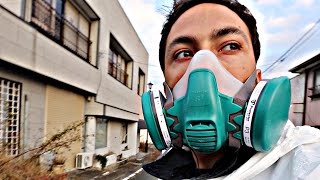
- Radiation cannot be felt, smelled, or seen, which the speaker highlights as the most insidious aspect of the site.
Details Worth Noting
- Concrete instructions: The transcript gives no preparation steps, dosages, or procedures. Its only practical guidance is to be aware that the area is contaminated and invisible radiation is present, and the video does not specify safety precautions beyond that.
- The video was filmed while the host shot a TV documentary about how uranium has shaped the modern world; the description reportedly contains broadcast details.
- The old Pripyat kindergarten and theater are shown deteriorated after about 30 years of weathering and no maintenance, with the theater described by the host as his favorite location.
- The host calls the site's interiors a real-life post-apocalyptic world, with overgrown streets, rusting structures, and crumbling buildings.
Bottom Line
The video works best as a visual and historical record: the Chernobyl site is still contaminated, but its abandoned town and forest show how quickly nature reclaims human spaces.