 digest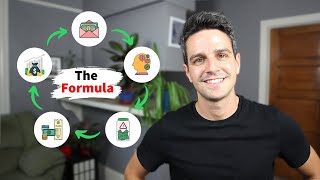
Start Here
Ladies and gentlemen, damas and caballeros, if you give me 10 to 15 minutes of your time today, I can show you how to manage your money so you will never go broke again. If you can pause what you're doing out of your busy schedule and just give me your attention, I can show you how to manage your money so you will never have to worry about your car breaking down, paying bills on time, or losing your job. I'm not even going to ask you for anything in exchange, just that one penny for watching those five-second ads in this video. Maybe even watch it two times and pay me two pennies.
Anyways, in this video I want to share a five-step plan to break away from the paycheck-to-paycheck life, a plan where you can take control over your finances and don't have to worry constantly about money. This is not a get-rich-quick side hustle video where I tell you to befriend an old person online. This is actually a practical video where you can apply everything I say in your life, and over time, if you manage your money this way, you will never have to worry about going broke again.
So here is my five-step plan to managing your money so you will never go broke again.
Understand Exactly Why People Are Living Paycheck to Paycheck
Step one is to understand exactly why people are living paycheck to paycheck. I want to start this video off by saying that money isn't random, it isn't evil, and it's not out to get you. Money is just basic math, and I am sure that you understand basic math. So I just want to start by getting you to understand exactly why people are living paycheck to paycheck, because it's so simple.
Now, 99 percent of people in this world will trade their knowledge, skills, and labor at a job in exchange for a paycheck. Then they use that paycheck for the first round of spending on big payments like bills, rent, and groceries. After that, there's a much smaller amount of money left over, and that smaller amount of money goes through a second round of spending on extra things like Amazon, eating out, and ice cream. After all that spending, there is no money left over, so they have to do it all over again: work, make money, first round of spending, smaller amount of money, second round of spending, no money left over, over and over. Most people live their lives this way.
Most people don't understand that this is not a sustainable way to live. For example, what happens if you lose your job? Well, money stops coming in and the entire thing collapses. Even if you have a ten-year job where you think you never have to worry about losing your job, it's just a vicious circle where things never get easier and there's no light at the end of the tunnel. You can't live your life this way. This is just existing, it is not living. You need to get out of this way of thinking and develop a more sustainable plan. So now I want to talk about exactly how to develop that plan, and let's start with the basics.
Adopt A Frugal Mindset
Step two is to adopt a frugal mindset. One thing that I preach over and over again on my channel is that being frugal is not about pinching pennies and depriving yourself. Frugality is managing your money in a way where you're not depriving yourself nor wasting anything. Most people could save so much money and create a much more sustainable lifestyle if they just adopted frugal habits and cut their wasteful spending.
So let's go back to the chart I just showed you, adopt some frugal habits, and see how it changes the flow. Just like before, they work and make money, but now they've adopted a more frugal mindset, and they choose to move to a smaller house where they don't have a bunch of extra space. They get a cheaper car with a smaller payment, and they take steps to lower some of their bills. Because they did that, they now have more money left over in the second round. So they use their frugal habits and cut out wasteful spending on the smaller expenses, like stop eating out so much, cut down their Amazon shopping, and only get ice cream three times a week. In the end, they have some money left over. You see how much of an impact the tiny decision of being frugal and cutting wasteful spending made on the flow, because they were making intentional decisions to lower their expenses. At the end of the cycle, they even had a little bit of money left over before the next paycheck.
This step alone isn't going to change your life, but it's a good place to start. It's the first step in getting out of the paycheck-to-paycheck life. So now that we've talked about this basic thing, let's go into a little more detail and move on to the third step.
Begin Establishing The Emergency Fund
Step three is to begin establishing the emergency fund. Although you've adopted some frugal habits that have put you in a better financial position, you can't just depend on frugality to have a healthy relationship with money. You have to develop a plan where you're not one paycheck away from catastrophic disaster, like 58 percent of Americans are. So let's go back to the chart, and I'm going to show you exactly how to do this.
Just like before, you work and make money, but this time, before you start the first round of spending, take a small amount of money out, whatever you can afford, and put it in a savings account. This is called paying yourself first, and we're going to put it toward the emergency fund. You need to do this to set aside a specific amount of money every single paycheck for this emergency fund, because what happens if your car breaks down or you lose your job? You're going to need some money, and Santa Claus ain't coming to town. So you put the money in the emergency fund and you never use it unless there's an emergency.
Back to the chart: you work, make money, pay yourself first, then do the rest. Over time, slowly, if you are consistent, this will grow. Ideally, the rule of thumb is that this should be six to twelve months of living expenses. In case you lose your job or something expensive comes up, you have the money ready. Because you did this simple thing, imagine if you suddenly lose your job: you can just take money out of the emergency fund in the meantime to pay your bills until you get a new job. At this point, you're no longer 100 percent reliant on a paycheck. You have this emergency fund to use in case something goes bad, and so you're slowly breaking out of this paycheck-to-paycheck life and developing a more sustainable way to live. You're no Elon Musk, but you're getting there. So now let's keep moving and move on to the fourth step.
Begin Getting Your Money To Work For You
Step four is to begin getting your money to work for you. Once you reach enough money in your emergency fund to cover six to twelve months of living expenses, congratulations, you don't need to add any more money into that, because of a little thing called inflation. You've probably heard of this before, but for some reason, over time, the price of a Big Mac just keeps going up. There ain't no dollar menu anymore. I don't know why this is, maybe greed, maybe selfishness, maybe corporate welfare. I am no economist, but this thing just happens over time.
Once you finish your emergency fund, you start to get your money to work for you. You get your money to make you more money, and you do that by opening a brokerage account and investing in something called index funds. I made a step-by-step video up here on how to do that, but let's go back to the chart and let me show you exactly how this works. You work, you make money, and since your emergency fund is complete, you stop putting money in it. Instead, you begin putting the money into an investment account, into the stock market. Then over time, that money will make more money. The thing about making money from this is that when you make money, you don't spend it. You just let it keep growing and keep making you money without you doing anything. This is called passive income: it's money that you're making without doing any work. If you look at the chart, all you have to do is put the money in the stock market, and over time it'll make you more money, and then that money goes back into the stock market, and over time it will make more money, and so on.
You can go on YouTube and see all these people promising you can make fifty thousand dollars a month in passive income by doing these things. But in my opinion, index investing, or investing in the stock market, is one of the only true forms of passive income. The other source is that you're going to have to work for like ten years, and then it'll eventually become passive income. So let's go back to this chart and watch the flow of this. Like always, you work, you make money, the emergency fund is complete, you invest, and then continue on with the rest: work, make money, invest, over and over. Index investing, or investing in the stock market, is not going to make you rich, but it is going to grow your money and help you fight inflation, rather than just putting it in a savings account. If you look at the flow of this, it's a much more sustainable plan, because if you lose your job, you now have the emergency fund to depend on and you have these investments. It's becoming much more sustainable. You don't have to worry about this vicious circle of living paycheck to paycheck and what's going to happen if you lose your job and no longer have a paycheck. So now that you're becoming more financially secure, let's get a little bit creative and move on to the final step.
Get Creative And Continue Expanding
Step five is to get creative and continue expanding. When you become less dependent on a paycheck by establishing an emergency fund and investing in the stock market, options start to open up because you're not as desperate anymore. Sure, you still need money, but you're always going to need money, and I think you're always going to want to work too. It's more about doing work that you don't despise. So at this point in our journey, you can be a little bit more creative. You can figure out new ways to generate income on your own terms. Let's look at the chart and see how this works.
An extremely basic way is maybe a side hustle, like being an Uber driver, to bring income outside of your normal job. Or you can consider starting a business. For example, I make money from this YouTube channel, which I use as income. In this day and age, there are an infinite amount of possibilities to make money. You don't need a small loan of a million dollars from Daddy anymore. You just need to think outside the box, be creative, and figure things out on your own. I don't claim to be the successful millionaire who has it all figured out, but I'm learning a lot about this right now. It is very hard to figure out ways to make money outside of a paycheck. There's no instruction manual. But as tough as it is, it is very cool to make money without depending on a paycheck.
So that is the system for how to manage your money without ever running out. Most people's financial situation looks like this: a vicious circle of make money, spend money, and need to make more money. A more sustainable plan looks like this: adopt frugal habits to lower your expenses, create your emergency fund, start investing to grow your money, and start generating other forms of income. The system isn't dependent on one single source of income. You could afford to go without a paycheck every now and then because you have these other sources backing you up. I could lie and tell you that I know how to make fifty thousand dollars in passive income and you could do it too, but that doesn't help anybody. This actually works. It's slow, it's boring, but if you take steps in your life today to develop a more sustainable plan and get out of this paycheck-to-paycheck vicious circle, you will never have to worry about going broke again. With that, muchas gracias. Video 109. Noble Chico.