 digest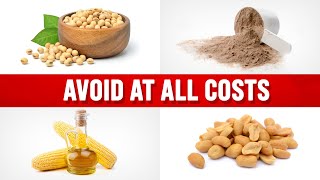
Introduction: Foods that ruin your liver
Now there are seven things in a lot of foods that will ruin your liver, and I wanted to increase your awareness on this because a lot of people are being exposed to these things on a regular basis and they don't know it. As far as your liver goes, you're about as healthy as your liver. Your skin is a reflection of the liver. If your liver is bad, your skin's not going to look too good. The liver is a huge organ, it's like three pounds. It helps you with digestion, it helps your blood clot, and mainly it helps you detoxify poisons. It turns poisonous things into harmless things.
So let's dive right in and go through the list.
1 Soy protein isolates
Number one, you want to avoid soy protein isolates. Here's a big question about soy protein isolates: what do you think they do to isolate this protein from soy? Well, they use chemicals. It's highly processed. They have to go through a whole series of things to extract this concentrated protein, and to do that they have to use something called hexane. That's a petroleum byproduct, a solvent. It's not good for the liver. It's actually a neurotoxin. So when you look at diet shakes, diet powders, protein bars, or veggie burgers, always read the label. I don't recommend consuming it if it has soy protein isolates.
The way I was introduced to soy protein isolate is that I had a series of people come into my clinic who were on a diet called Ideal Protein. That was a major ingredient in this so-called healthy ketogenic plan, which had very low carbs but also very, very low fat, and very, very low quality ingredients. It was filled with soy protein isolates. I noticed when people got on that program, when they lost weight (and they did lose weight), they didn't look healthy. A number of them developed serious liver inflammation, higher amounts of liver enzymes, a lot of digestive problems, and gallbladder issues. When they came off those products, it cleared up and they did much better.
2 Fructose
Number two, fructose. You have high fructose corn syrup. You have the fructose in fruit. You have something called agave nectar as a sweetener, which is about 70% fructose. Even table sugar is half fructose and half glucose. Fructose is a very interesting sugar because it's not metabolized by all of your cells. It's only metabolized by your liver. So anytime you consume fructose, your liver has to deal with this sugar. It is stuck dealing with breaking it down and metabolizing it. This is why people who consume a lot of high fructose corn syrup develop a fatty liver far more than if they were consuming just glucose itself. Even people think agave nectar is so healthy, but it's not, because it contains fructose.
Here's the confusing thing: fructose on the glycemic index is pretty low, around 19, while glucose is 100. So if you have a sugar that is half glucose and half fructose, it's going to land right in the middle, about 74 or 75. But the point is that if you rely only on the glycemic index as your principle, and you think, "Wow, it's low, I'm going to go ahead and eat it," you don't understand that the liver has to metabolize that specific sugar, and indirectly it creates a lot of problems, especially with insulin resistance. Once you have more awareness, you can actually do the right thing by avoiding too much fructose. Despite being low on the glycemic index, fructose is not a good sugar, especially for the liver, especially if you want to avoid getting a fatty liver.
One more point: especially when you're dealing with high fructose corn syrup, all that corn is GMO, and that gives you another level of toxicity, like glyphosate, an herbicide that's not good for the liver. Instead, use sugar alcohols like erythritol and xylitol, or use stevia and monk fruit.
3 Vegetable fats
Number three, vegetable fats. Vegetable fats sound so healthy, don't they? They're just the fat of vegetables. Well, there's actually not much fat in vegetables. If you look at salad and leafy greens and check the nutritional profile, you'll see there's not much oil or fat in vegetables. So despite being called vegetable oils, they're really grain oils and bean oils, such as soybean oil. I'm talking about corn oil, soy oil, canola oil, and cottonseed oil. These oils are very processed and very oxidizing to your tissues, which means they create a lot of inflammation. They're a very fragile oil, omega-6. An average person in the US consumes about 70 pounds of this vegetable oil.
About 30 to 40 years ago, we switched all of our saturated fats with unsaturated fats, unfortunately. So our membranes are now being built with these unsaturated fats, and it's creating a lot of problems with inflammation, and with that come a lot of other issues. Not to mention GMO, and more glyphosate, which is "Roundup Ready," in these products. So what you want to do is consume a lot more omega-3 fatty acids: sardines, cod liver oil, salmon, things like that. And just as an FYI, there was a meta-analysis of over 72 different studies that showed there's no benefit from shifting from saturated fats to unsaturated fats. Zero benefit. In fact, a lot of negative things have occurred.
4 Whey protein powder
Number four, whey protein powder. Think about what whey protein powder is. It's a protein in milk and dairy, and it's highly concentrated to be extremely low-fat, if not zero fat. Anytime you consume something refined out of the normal complex that nature designed, it comes without its package. Whey protein is inflammatory. It's a bit toxic to the liver, and it increases inflammatory markers. Long ago, before I had any awareness on health, I wanted to gain weight. This was in high school, so what did I do? I consumed protein powder and started chugging that stuff down, and man, did I get sick. Not only was it filled with whey protein powder, it was filled with the next thing on the list, which is maltodextrin. So when you consume protein, make sure you consume it with the fat that nature has packaged that protein with.
5 Maltodextrin
Number five is maltodextrin, which is in so many foods. It's crazy. It's in all the protein powders, sometimes as the first ingredient. Here's the problem with maltodextrin: it's a synthesized or synthetic sugar, and it's higher than glucose on the glycemic index. It ranges between 110 and 130, it's just off the scale. So you're consuming something that is far worse than sugar for your blood sugar, your pancreas, your weight, and your liver. Maltodextrin is put in a lot of vitamins. It's used as a filler and as a drying agent for oils. It's hidden in a lot of so-called keto-friendly foods, which I'm going to be doing a lot of education about. Basically, it makes your liver fattier. Before I forget, I was going to mention they make maltodextrin from corn, wheat, rice, potato, and tapioca, so sometimes it's going to be from GMO ingredients, but you want to avoid it. They even use it in post-workout gels. It's in Splenda, in puddings, in protein bars, and in a lot of different things.
6 Aflatoxins
Number six, aflatoxins. You want to stop consuming aflatoxins. What is an aflatoxin? It's a toxin from a certain fungus, and it's carcinogenic to your liver, so your liver does not like this. You're primarily going to find it in peanuts and corn, especially in a moist, humid environment. If you consume peanuts or peanut butter, the best way to make sure you don't get aflatoxins is by consuming Valencia peanuts. Valencia peanuts are much drier and usually don't have aflatoxins, especially if you get organic Valencia peanut butter. Of course, if you've been watching my videos, you're not going to be consuming corn, but corn is in a lot of products, so you'll have to watch that as well.
7 MSG
Number seven is MSG, monosodium glutamate. It's in a lot of different forms, including modified food starch, so you really want to start reading the ingredients. They put it in pork rinds. It's in so many foods as a flavor enhancer. Fast food restaurants use it to enhance the flavor, because if it wasn't in there, you wouldn't eat as much. MSG causes you to eat more of it. It's definitely in Chinese food. It's a lot of sodium that's hidden. It's not really salty, but you'll get fluid retention after you consume it. But that's not the big problem. The big problem is that it's toxic to your liver. It's even in things like cottage cheese if you're buying commercial cottage cheese. I would recommend just starting to read the ingredients. When I was in practice, many of my patients complained of being sick, and I asked them when they started being sick and what they had eaten just before that. There was usually some ingredient on the list they had consumed that they weren't aware of and didn't connect to how they felt.
Is red meat bad for the liver?
What about red meat? Is red meat bad for the liver? The answer is that if you're consuming grass-fed red meat, it's not bad for the liver unless you have a problem with iron. Our bodies are not designed to get rid of iron easily, and too much iron can be very toxic to the liver and even cause cirrhosis. Red meat is high in iron, so if you have that problem, you'll probably have to avoid red meat. But for most people who don't have a problem with iron, red meat is not going to be a problem for your liver if it's quality.
What is the best food for the liver?
Out of all the foods that are good for the liver, the cruciferous family of vegetables is the best. That includes arugula, kale, broccoli, and Brussels sprouts. You definitely want to consume those on a regular basis.
Check out my video on how to repair your liver!
Now that you have this information, the next video I'm going to recommend is about what to consume or what to do to repair a liver. I put it right here, so check it out.