 digest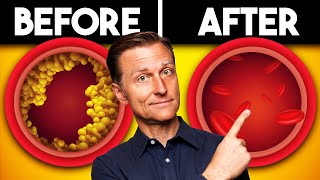
Introduction: How to clean out your arteries and reduce the risk of heart disease
Let's talk about the best meal that you could eat to help reduce plaquing in your arteries or even help prevent cardiovascular disease. Now, I've done a lot of videos on what to avoid to prevent heart disease. Today I'm going to primarily focus on what to eat. But we first have to give you a little background of what is going on behind the scenes as far as cardiovascular disease, and primarily we're going to talk about plaque.
What causes plaque in the arteries?
Now, what is in plaque? Plaque is a combination of calcium, protein, and cholesterol. Many times the calcium is the result of biofilms. So what's a biofilm? It's a colony of microbes that have built these little calcium igloos or shells to protect themselves so they can go underneath the radar. So when you see calcium plaque in the arteries, underneath that plaque there could be a microbial community and biofilms that accumulate on roughened edges. If the arteries were nice and smooth and strong, they probably would never accumulate on the arteries. But the question is, what causes them to get stuck on the inside of the artery wall, in your coronary artery for example? Well, that would be some type of lesion, oxidation, inflammation, or damage from excessive sugar in the diet. It could be that you're diabetic, or you could be pre-diabetic. It could come from omega-6 fatty acids, junk foods, alcohol, all sorts of things.
High LDL cholesterol
So when you see plaquing, you're also going to see LDL, a very specific kind: the small dense particle size. That's correlated with a high-sugar, high-carb diet. Some of this cholesterol is in this little package, and that's what LDL is. It's a protein that carries cholesterol. Cholesterol doesn't exist in the arteries as free-floating cholesterol; it's always in a little shuttle bus. The cholesterol comes in the form of a Band-Aid with this cement, the calcium, and then you're also going to get fibrous tissue, like a protein cement, that mixes in with the calcium and the cholesterol as a Band-Aid. Then you'll see a thrombus, or clot, forming in that same area.
Given that information, what can we do to prevent, slow down, or reverse this situation? There are several things to know. One of the controlling vitamins with calcium is vitamin K2. Vitamin K2 drives the calcium into the bone. Without enough K2, calcium tends to develop in the soft tissues of the body, not just your arteries but also in the joints.
There's one more point about biofilms. There are some interesting things about biofilms, especially when we're dealing with plaquing in your arteries. Several studies I found link periodontal bacteria, the bacteria in your mouth, to the plaquing in your arteries. That's interesting, because these periodontal bacteria are pathogenic, and they're in your mouth ending up in your heart. Now you have to realize that in the mouth you have over 700 different species, not just bacteria but different types of bacteria. One of the reasons these bacteria can go through the pores of your gums and into your bloodstream is the same reason bacteria can leak from your intestines into your bloodstream. That's called bacterial translocation, where bacteria move through the wall. They might get bleeding gums, which allows the microbes to go right through these little holes into your bloodstream.
The best nutrients to support your heart
So high vitamin C foods are definitely necessary for this meal, so foods with large amounts of vitamin C would also be a good thing. Then we have vitamin E. Vitamin E, in relationship to keeping your cardiovascular system intact, is very, very important. First of all, it helps prevent those lesions on the inside of the wall of the artery, called endothelial tissue. When you're low in vitamin E, which is a very powerful antioxidant, you can get a lot of oxidation and inflammation. Vitamin E is also important in the heart muscle itself, keeping your oxygen high and helping prevent an actual heart attack.
So we have vitamin K2, very important; vitamin C, very important; and vitamin E. The other important thing for the heart, especially to avoid that lesion in the artery, is to keep your omega-6 fatty acids very low and keep your omega-3 very, very high. So a really important thing in this meal should be omega-3 fatty acids.
The best foods for blocked arteries
So what should this meal look like? Let's start from the top, with omega-3 fatty acids. What food is very, very high in omega-3? Wild-caught salmon. If you include salmon in this meal, you're going to have a good amount of omega-3 fatty acids, which will support the arteries as well as the heart muscle itself. Having enough omega-3 will also decrease inflammation in your arteries, and doing that can actually lower blood pressure.
There's something else I think is very, very important in preventing and even maybe reversing some of this plaquing in the arteries. This food has about seven times the requirement of vitamin C. It is also one of the most microbe-dense foods you can eat, giving you a strong probiotic effect with high levels of lactic acid bacteria. Let me discuss lactic acid bacteria. It's not just one bacterium; it's a group of many different types of bacteria that are usually involved in fermentation. The food I'm talking about is sauerkraut, a fermented cabbage product, and sauerkraut is loaded with these lactic acid bacteria.
Lactic acid bacteria on their own are very interesting. They can act as an ACE inhibitor to help lower blood pressure. They can inhibit biofilms, which is very cool. They can decrease the risk of cardiovascular disease by supporting your gut. There is a huge relationship between a healthy gut with the right microbes and a healthy heart. Lactic acid bacteria can also help regulate LDL cholesterol, especially the small dense particle size LDL. Having enough of these bacteria can enhance your production of secondary bile salts, which can help the absorption of more vitamin E, vitamin D, and vitamin K2. All three of those are fat soluble and can greatly support cardiovascular tissue, and it just so happens that sauerkraut is loaded with vitamin K2. Normally vitamin K2 is in certain hard cheeses and fats, but microbes can also make K2.
To summarize, sauerkraut is a superfood for the heart. It supports the gut lining to prevent these microbes from traveling through a leaky gut up into the heart. It has many diverse types of microbial entities that can greatly help you in many different ways. Sauerkraut is loaded with vitamin K2 to keep calcium out of the arteries, and it's loaded with vitamin C, about seven times the RDA. That gives you a tremendous amount of vitamin C that can directly inhibit biofilms as well as act as an antioxidant in your arteries, preventing these lesions or damage to the artery wall. Remember, biofilms can only stick to an area that's roughened or irritated. If your arteries are smooth, they can't quite stick to the inside of your arteries to form plaque in the first place.
The last part of this meal is a big arugula salad with several things in it, which I'm going to cover. Arugula as a vegetable is a superior salad green compared to regular lettuce. First of all, it's cruciferous, so it's really good for the liver. It's bitter, and it has blood glucose lowering properties. It's loaded with something called DIM, which can help lower biofilms directly. It also has fiber to feed the bacteria, and it's loaded with potassium, which can help keep the arteries softened so your blood pressure can stay normal.
On that salad I would put extra virgin olive oil, the real stuff. It has significant effects on blood pressure, not to mention very powerful anti-inflammatory effects. I would also add apple cider vinegar, though you can also use red balsamic vinegar. The acetic acid in vinegar has many properties that help lower the risk of cardiovascular disease. It's great for helping regulate blood sugar, it can help regulate cholesterol, it can help mobilize your bile salts, and it has anti-inflammatory properties. If you add sunflower seeds, you can spike more vitamin E, which, as I said before, is very, very important.
The next thing I'm going to talk about is a hard cheese. Hard cheeses are loaded with vitamin K2, and the type I would recommend is called parmigiano. I probably did not pronounce that exactly right, but the American translation from Italian is Parmesan. There have been a lot of lawsuits involving this topic, because Kraft trademarked this English translation of the real Parmesan cheese from Italy. The real Parmigiano-Reggiano is only produced by a collective group of farmers in Northern Italy who keep their standards very high, and this has been going on since the Middle Ages. It wasn't until fairly recently that Kraft came in and started to make it. Unfortunately, there's a big difference in how they make it in America versus Italy. In Italy they age it for one to three years; in America I think they age it for about 10 months. The Kraft version does not have to abide by the same policies, rules, and laws that the authentic cheese in Italy must follow. Another thing to watch out for in this Americanized Parmesan is that sometimes they add a filler of cellulose, which is wood pulp. What I would recommend is getting the authentic type from Italy and shaving it onto your salad. I do it every single day. That way you have a delicious cheese that's loaded with vitamin K2, a great amount of protein, and probiotics. It's an incredible product. I actually went to one of the farms where they create this cheese, and I was blown away by what they feed the cows to make sure the microbes are just right, and by the soil they grow the grass on. The cows don't get fed grain; it's all grass. The amount of work that goes into making this cheese and keeping it a truly standard process is mind-blowing.
The last thing I'm going to recommend on your salad is garlic. You can use powder, actual garlic, or fermented garlic. Garlic is great for the heart. It can thin the blood if you are at high risk for clotting, it can help lower blood pressure, and it's antimicrobial and anti-biofilm, and the list goes on.
Now that you have that information, I think the best and most interesting next video for you to watch would be the one on biofilms in your mouth. Check it out. I put it right here.