 digest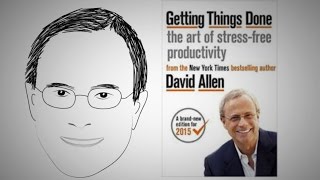
I recently reread the book Getting Things Done by author David Allen. Have you ever been in a situation at work where the number of things you could do, should do, or have agreed to do are filling your brain to its capacity? In an act of desperation, you may have put some of your appointments in a calendar, some of your actions on a post-it note, and some of your ideas on a notepad. If you've ever used one of these three tools, you've openly acknowledged the fact that your mind can't keep track of all the things you need to do but can't do in this moment. For most of us, it kind of feels like a character flaw, and we're ashamed to admit that we can't keep track of everything. But it's not a character flaw. It's simply a fact about being human. Our brains weren't designed to function this way. As author David Allen says, "Your mind is for having ideas, not for holding them." With over 30 years of executive coaching and validation from the latest cognitive science, author David Allen has proved that by relying on our calendars and our notepads at all times, not just when we're in a crisis, we can experience stress-free productivity. By getting all things that we can't resolve in this moment into an external brain, we can free up mental space, be fully engaged with the current task we're doing, and be fully present with the people in our lives.
David's Getting Things Done System, GTD for short, leverages a nice brain hack: the fact that we can relieve the brain of the anxiety of unresolved items by simply capturing them appropriately. You see, when we think of could do, should do, or things we've agreed to do, and we haven't appropriately captured them or completed them, there's a part of our brain that actively thinks about them. It's like opening up multiple programs on our computer and allowing them to run in the background. After you open up enough of these programs, your system starts to slow down and it eventually crashes. By capturing everything in a trusted system, an external brain that we can rely on, we give our brain permission to close those programs and free up mental processing power, allowing ourselves to be fully engaged with what we're doing at this moment so we can be fully present, effective, and creative. However, building a system that we can trust is damn hard. I've struggled with building a GTD system that I can trust for years. But after rereading David's book several times, I finally realized that there are no shortcuts. In order to trust my system, I need to develop and consistently execute three vital habits. The three vital habits are capturing, processing, and reviewing.
The first vital habit is capturing. When I feel an internal notification that I should remember this, or I'd like to do this, I've learned to immediately get it out of my head and write it down in almost any situation. When I'm in the shower, I use a waterproof notepad. When I'm driving, I'll use Siri on my iPhone to record ideas. Anything that has my intention has to be captured and put in some sort of an inbox that I'll process later. What I capture doesn't need to be fully formed. I simply need to get it down in its rawest form. The idea doesn't have to be good. By capturing a bad idea, I make room for a good idea. The goal here is to temporarily release the pressure of having to hold on to something and create mental space so that you can be present. You know the power of this habit if you've ever made a list and felt the relief of getting everything down on paper. David simply suggests that we take this to the extreme and we do this all the time.
The second vital habit is processing. Each day at 4 p.m. I have an appointment in my calendar called processing. My processing appointment involves looking at each item I've captured since my last processing session and asking two core questions. First, do I want to act on this? I will always default to no and put it in a someday maybe folder or reference folder to avoid wasting time doing non-essential things. I'll check these folders once a quarter or maybe once a month. If the item is something I really want to do or need to do, I need to convert it into a next action and desired outcome. In the book, David says that things will remain on our minds if we haven't clarified an intended outcome and a very next physical action step that we can take. Here are two examples of how you convert a captured item into a next action item. So say you captured "budget meeting." It gets converted into "draft thoughts for the budget meeting agenda." Say you just wrote down "filing system." There was something wrong with the filing system. You convert that to "talk to Angela about the filing system we need to set up."
Once I determine the next action, I need to identify the outcome. The purpose of doing this is to discover if the outcome requires more actions in the future. If it does, you've discovered a project and it needs to be added to the project list. This is important because just writing down a next action won't be enough for your brain to release that item and allow you to stop thinking about it. For example, if a next action is to drive to Home Depot and purchase new handles for the bathroom cabinets, but my ultimate outcome is bathroom renovation, I'll need to put bathroom renovation in the project list so my brain doesn't have to keep reminding me that there is more to do in this area. Once I have all the things I want to act on converted to next action items and I've updated my project list, I look at the next action items and ask, am I able to complete this in 2 minutes or less? If I can complete it in 2 minutes, I'll get it off my mind and out of my system. If not, I'll place it in one of three locations: my calendar, my next action list, or my follow-up list. If it's time-specific, I put it in my calendar. If it's not time-specific, but needs to be done as soon as possible, I'll put it on my next action list. And if it's something I've delegated or I'm waiting for information on, I put it on my follow-up list and check in on it periodically. When the next action list gets too long, like say more than 30 items, I'll start breaking it down into context-specific lists like "at home," "at office," or "at grocery store." Whenever I arrive at a certain context, like "at computer," it's a cue to bring out my "at computer" list and start working away at it. The goal of the daily processing habit is to remain in control of your stuff so that your stuff doesn't have control over your mind. David says the reason most organizing systems haven't worked for most people is that they haven't yet transformed all the stuff they're trying to organize. As long as it's still stuff, it's not controllable.
The third vital habit is reviewing. Every Friday at 3 p.m., I block out 45 minutes to complete a top-down review of my system. The goal here is to get my system current. I start off in the clouds and I ask myself, what would I like to be doing on a typical day 3 to 5 years from now? From that perspective, I then go down to the rooftops and ask myself, what projects, aka short-term outcomes, most contribute to my 3 to 5 year vision? Then I go down to the ground and I ask which next actions are critical to completing those projects. Once I've identified the projects and actions I'd like to focus on this week, I'll update my calendar, prioritize my lists, and clear out old items. This weekly review maintains my trust in the system by keeping it current. I find it's important to do my weekly review in the same place at the same time each week. And I'll treat myself to something special, something I'll only have while I'm doing the review, like a chocolate bar or a milkshake or a nice lunch. To keep your system alive, you need to consistently perform CPR: capturing, processing, and reviewing. By embracing a bit of structure, having zero tolerance for trying to hold on to things in your mind and committing to a select few habits, you can free up mental space, and be fully present, effective, and creative. Your mind is for having ideas, not for holding them. That was the core message that I gathered from Getting Things Done. I highly recommend picking up David's book and learning the finer details of how you can build a system you trust. If you would like a one-page PDF summary of my GTD system, just click the link below and I'd be happy to email it to you. If you already subscribed to the free Productivity Game newsletter, this PDF is sitting in your inbox. Thanks for watching and I hope you have a productive week.