 digest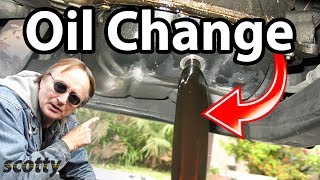
Today I'm going to show how to correctly change oil in a modern car. Now, over the years, both cars and the oil that goes in them have changed. For instance, in my old Toyota Celica here, I used conventional motor oil and changed it every 3,000 miles. That's how older cars were made. But a modern car like this Toyota Matrix, which has variable valve timing, is much more complex and really requires synthetic oil. These oils are lighter for tighter tolerances. In this case, it's a 5W-30 oil. So you mentioned with this Platinum oil that's also a 5W-30 oil, and of course you can use any quality synthetic oil. I'm using this because it's a good oil, and it was on sale at Walmart for five bucks a quart. In the case of this 2007 Matrix, Toyota requires five-thousand-mile oil changes.
Now, if you have a late-model car like this Toyota that uses a 0W oil, you can use the Pennzoil Ultra Platinum full synthetic oil, and you only need to change it every ten thousand miles or once a year, which is what Toyota suggests: change it once every ten thousand miles or once a year. And if you're going to change your oil that less frequently, you really need a better oil filter than some of the cheap ones that don't filter that well. But how can you tell if the filter is better or not? Well, first let's weigh them to see which has more material in them. Okay, the cheaper Auto Light filter weighs 160 grams, while the Platinum filter weighs 192 grams, so it's obviously more material in the fancy filter. Well, let's cut them in half and look inside. What are you going to do, cut a half? I don't cut the Platinum one, I'd have to, I'll compare the insides. The cheaper filter and the expensive one have the same type of shell, but the seal on the cheaper one melted right off and fell. The one here is still on the better filter, so it's got a better seal on it to begin with. But the main difference is the filtration material. The cheaper one, you can see, has much less pleat, so there's less surface area, and it uses a cheaper paper material. This is a better composite one that can hold a lot more dirt. When we look at the bottom of the filters, the anti-drain-back valve is cheap, made out of plastic, on the cheaper filter, but here it's all metal with a metal spring, so it's going to last a lot longer. So if you're going through all the trouble of using the right oil for your engine, you might as well use the right filter that's going to filter it for a long time.
Now I'm going to show you how easy it is to change your own oil. You just have to jack the car up a little. All modern cars are pretty low to the ground. Now, some guys don't really want to put a jack stand under here, but really we're just jacking the car up. The tires are still on the car, so even if it went down, the car would still land on the tires. It wouldn't crush you. Here's where years of experience have taught me a lot. Sometimes it's hard to get those drain plugs off, so get a long bar like this with a socket on it, then you can easily pull it loose. Of course, you have your drain pan ready to catch the oil when it comes out. Here's the oil drain plug. You just put the socket on and give it a big pull. Oh, here it goes. Go in with your fingers and gloves so you don't hurt anything. Out it comes. And of course, realize that you should run your engine for maybe five minutes and let it sit for 10 minutes before changing the oil, so the oil is warmed up and flows better, but it's not too hot. That's why you wait. For the drain plug, it's a good idea to get a new gasket every time to put on before you put it back on, to make sure it doesn't leak. Then, once it stops dripping, put the plug on with your fingers, then put the socket on to make it nice and tight.
Now comes the oil filter. I'm not that strong, so I cannot unscrew these things by hand, but sometimes they stick on. I argue maybe not that strong, so they make these simple tools that cost about seven bucks at AutoZone. They go right on the oil filter, you put a wrench and extension on them, and then they can turn them off real easy. Now, before you put the new oil filter on, here's a tip: you stick your finger in oil, wipe it around the lip where the seal is. That makes it seal better, plus it makes it easier to take off next time. Then you just screw the filter back on and make it nice and snug. Then you just pour the correct amount of oil back in. There are two ways of doing that: you can either look it up in your manual, Google it, and find out what it is, or you can do it the old-fashioned way. You can check it before you change it, make sure it's full, then measure exactly what comes out and put the same amount back in. You can't beat that.
Then the question arises: what do you do with the old oil? Well, I pour mine into a container and take it to a recycling center. Many auto parts stores take your old oil too. You can just pour it back into the containers the new oil came in and give it back to them, and they'll recycle it. So now you know how to correctly change oil in a modern car, because you don't want to ruin one of these fancy modern engines. They cost a fortune to repair, and oil changes are simple and quick. And remember, if you've got any car questions, just visit the Scotty Kilmer channel.