 digest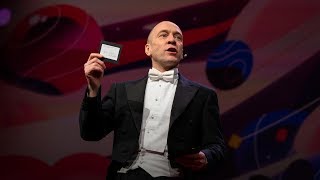
We are all trapped inside our own heads, and our beliefs and our understandings about the world are limited by that perspective. Which means we tell ourselves stories. Right? Here we are in this infinite data source. There's an infinite number of things that we could think about, but we edit and delete. We choose what to think about and what to pay attention to. We make up a story to make sense of what's going on, and we all get it wrong, because we're all trying to navigate with our own skewed compasses, and we all have our own baggage. But the stories themselves are utterly convincing, and we all do this. A lot of the stories that we live by aren't even our own. The first ones we inherit at a young age from our parents, who of course have their own skewed beliefs, their own frustrations, their own unlived lives. For better or worse, we take all that on board, and then we go out into the world thinking maybe we have to be successful to be loved, or that we always have to put other people's needs first, or that we have some big terrible secret we couldn't possibly tell people. And it's just fiction. It's just stories. We'd worry a lot less about what other people think of us if we realized how seldom they do so.
I feel that magic is a great analogy for how we edit reality and form a story, and then mistake that story for the truth. I've had a 20-year career in the UK staging big psychological experiments on TV, and now that's on Netflix. I also have a stage show. I've got my first Broadway show actually coming up, called Secret. Just throwing that out there, no pressure. That should be this year. And I try to do something new with mentalism. Mentalism is the dubious art of getting inside your head. There was a heyday for this kind of stage mind reading, which was the 1930s. That's why I'm dressed like this, in my most untoward garb. There was an act known as the Oracle act. In the Oracle act, members of the audience, as I know you have done, would write down secret questions, the sort of question you might ask a psychic. They would seal that question into an envelope, and on the outside of the envelope they would write their initials and roughly where they sat in the audience. Then the oracle, the mind reader, would take an envelope one at a time. He wouldn't open it, but he would attempt to divine what question was sealed inside. If he got that right, he would try and answer the question for the person too. The act spread like wildfire. It's a testament, I think, to the seductive appeal of some powerful figure offering you easy, simple answers to life's complex and subtle questions and anxieties.
Thank you all of you that wrote questions. I haven't seen these. I know somebody's guarding them, someone's collected them up. Thank you so much. Thank you, sir. I will take those now. Thank you all of you that did this. I should say probably a couple of things before I start, in absolute honesty. First of all, I can't see through these envelopes. They are sealed. They are thick black envelopes. You'll know if you wrote one; I can't see through them. Secondly, importantly, I don't know any of you, and nobody is playing along. That's not what this is. Thirdly, I don't believe for a second that I have any special psychological gifts, let alone any psychic ones. So let's begin. Nope, okay. This one, oh nice, okay, this one's interesting. There's a couple here. I can start with maybe this one. This one's interesting because the writing undulates. There's a sort of up and down thing, which normally, not always, normally means that the person doesn't know the answer to the question themselves. So it's normally a question about the future, right? That sort of suggests uncertainty. So I'd say it's a lady, age-wise. It's a little difficult to tell from this minimal handwriting, but I'd expect maybe 30s, maybe 40s. But let's find out. It says on a question about the future, it says J N, uh, center. So there's going to be somebody in this big central section here. If you think this is you, if you wrote one, could you make a fuss? It's a bit difficult for me to see in the center. Hi, give us a wave. So J, um, Jane, Jessica? Yes, which one? Jessica. Jessica, thank you. Just a guess. Little murmur of approval. Thank you, I'll take it. Um, all right, so Jessica, I won't ask your age, but is it a question essentially about the future? Yes. Yes. Yes. Okay, all right. So what do we ask? What does Jessica ask about the future? So, am I okay with late thirties, early forties? I'm going to have to take it. I'm taking it. Okay, all right. Okay, so it's important because we ask different questions depending how old we are. I think with you, this is going to be just, just say, just say, I'll take it again, just say those words. I'll take it. Virginia, from Virginia? Uh, yes, I am. Yeah. So I think this is a lady. I think this is a lady who wants to leave Virginia. I think you're looking at plans, or whether or not things are going to come together. Get up and show me, show me your hands, other side, so I can see fingernails. Okay, I think, I think you have a farm, and it's whether or not you're going to sell your farm and get out of Virginia. Is this right? Absolutely. All right, great, thank you. It's a great question. What was the actual question? What did you put? Will they sell the farm in Virginia? Will you tell us? All right, so look, it's a great question. If you are pretending to be psychic, because it's about the future, which means I can give you a yes or no on this, it means nothing. You have no way of verifying it. And a dangerous thing to do, really. If I say yes, I know it'll just stick in the back of your mind, and it can't not start to affect your decisions you make. So a dangerous thing to do. However, yes, I think you will sell the farm, because I think you're the sort of person that, in the nicest way, will get what you want. I think there's things you want, you tend to focus on them at the expense of other things that you know you probably should be focusing on more. Would you agree? Uh, educated, um, you spend a few years, and say yes again. The word yes, quickly. Yes. No. California, Barclay, is a bit of a guess, but I went to Berkeley. Yes, I did. Yes. So listen, it's a yes. Oh, and you've been to India recently as well. There's just a tiny, tiny little thing going on there. Yes. No. Yes, yes. It's a yes from me. I just don't want to say it like it's written in the stars, because it isn't, and you need to take responsibility for it. Would you accept that as an answer to your question, though? Yes. Yes. Fantastic. Have a seat. Thank you.
Let's do another one. Um, a, a H, also in the center. This would be a man, a little older, maybe late 40s, I would say. For this, a H, center. Stand up for me if you think this is you. A H, height. Let's get a microphone to the sky, quick as we can, on camera. Would be yes. Amazing. Oh, look at that. Freeze. Don't move. Don't move. Keep absolutely still. Are you standing? Where are you? I am standing in my best shorts. Okay, all right. Now you've, okay, you've changed that. There was just something you did as you stood up. Yes or no? Have you put something on here? You're not doing it now, but you did it as you stood up, to do with your left, either your left leg or your left foot. Yes or no? Just yes or no. Yes. Yes. All right. He was giving us a nice, clear signal as he stood up. All right, I'll try and be quick on this. Put your weight on your left hand side and say yes for me. Yes. Take your hand out of that pocket, put your weight on the other side, change hands with the mic, and say yes again. Yes. You have, you've got, you have a dislocation in the big toe on your left hand side. Yes. Thank you so much. Great, good one. Take a seat. Take a seat. All right, can I get the microphone? I'm going to change microphone for this. Can I grab a mic up? Thank you. Um, thank you so much, that would be great. There. I'm going to change mic, because hopefully you can now still hear me, because I'm going to blindfold myself, and I'm doing this now, so that I don't have the clues as you stand up. I can't see where you put your hands. I can't see how you respond to what I'm saying. Can't see what the people next to you are doing either, if they know the answers to the question. That's always very helpful. Um, I won't have those advantages, but strangely, this frees me up, and I want this to free you up as well. So if you didn't write a question, but you wish that you had done, you can still take part. The point of writing the question is only that it just kind of gets a nice, clear, succinct wording in your head. So if you can do that anyway, if you can just find a question in your head, make it clear and succinct, just send it to me, and I'll try to do this now without anything written down. So just start to form questions, but send me your name as well. That's important. My name is, uh, whatever that last guy was, sorry, and you know what's strange about my feet, or whatever. Whatever the question was, so name and question. There is somebody already. I'm guessing you're quite near the front, because your name is quite clear. Feels like you're in the center at the front. Okay, let me just, Alan. Feels like there's an Allen, and you're neither. Are you, qui, you're going to be quite near the front, vaguely central, I think. Just like it's coming from right there. If it's like a man, maybe six, early sixties, something like that. Yes. Okay, so you've got a mic. Great, thank you. It's going to match this guy. Uh, Alan, just say stop when I get to you, so that I know where you are, where to face. Start. You, Capricorn? Yes. So Alan has something in his head now. Did you hear, hear the reserve and his voice? It's going to be something really tricky. I think with you, I just say yes again for me. Yes. It's going to be either no, it's not, it's a part, it's a, it's uh, access, it's part, it's a password or access to something you've had. If you've got something, just yes or no with a password in your head. Yes, like a computer password, that sort of thing. Yes. Excellent. Um, in that case, I'm going to finish on this one. Let me, uh, if I get this right, they're all going to know what it is, and millions of people potentially. You will change it, won't you? Of course. All right, okay, all right. Uh, just say of course again. Of course. All right, what is it? If it's a word, I imagine it's a word, right? Just see the password written in front of you, big clear block capitals, and as you look at it, think for me of a letter somewhere in the middle. Don't say it out loud, just get a letter in your head that's somewhere in the middle, if you've got one. Yup. Okay, stick with that for me. Yeah, you changed. Okay, you changed your mind, though. I think you settled on, I think that's a B. Yes. No, it didn't. Then it's an I, correct? Yeah, but you had a B. Yes. Yes. Yeah, he changed his mind. He changed his mind. Okay, so see it written there. Let me just, all right, just keep saying it yourself in your head again. Oh, you play drums, don't you? I do. Yeah. Just get that out of my head. Get that out of here. Just focus on this, uh, focus on this one thing.
[Applause]
My job is to sell you a story, right? I try and do this to all of you: to get you to pay attention to one thing that I want you to find important, ignore other things that I want you to ignore, and then join up those narrative dots to tell yourself a certain story about what I'm doing. And this only works because we are story-forming creatures, which means we do this every day. We go out into this complex and subtle world, full of complex and subtle people like you and me, Alan, and we reduce them to these neat characters that fit whatever story we're telling ourselves. And we say, she's insecure, he's arrogant, they can't be trusted. And these are just stories, like the story that I can somehow read your mind. You're thinking of selling your company as well, aren't you, at the moment? Correct. Which is something to do, which is something to do with skin, skin care, or something like this. Ah, yes. And I think the reason why I love doing this is that it reminds me, at least, to try and be more alive and alert to the complexity and the subtlety of what's real, that there's always other stuff going on that we don't know about. And it means we can get less stuck. We can be kinder to people, because we can recognize there's always fear behind their stress, so we don't need to meet it as defensively, and we can start to see the stories for what they are, and recognize that life isn't all about us. Oh, your password. Where are you? Where are you? Where is it? Right here. Stand up for me. Your password is ARIIBOY, A-R-I-I-B-O-Y. Is that right? That's correct. Thank you so much. Thank you very much indeed. Thank you.