digest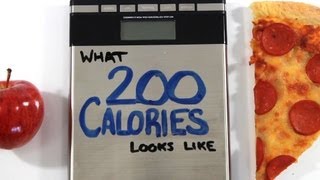
Short Summary
Main recommendation: Pay attention to the physical volume and nutritional quality of calories, not just the number, because 200 calories of different foods can look and affect the body very differently. The video argues that calorie counting alone is not the whole story, and that what goes into your body matters as much as how many calories it contains.
Key Points
- The same 200 calories can take very different forms: a large volume of apple or broccoli versus a small amount of cheese, wine, or a Big Mac.
- A calorie is defined as the energy needed to raise the temperature of 1 g of water by 1°C, and food supplies the energy we need to survive from carbohydrates, protein, and fat.
- Average daily needs are said to be roughly 2,000 to 2,700 calories, depending on height, weight, gender, and age.
- Calorie-dense foods such as peanut butter, muffins, and Doritos fill the daily requirement quickly, while celery and carrots are low in calories and high in volume.
- Fewer calories does not automatically mean healthier: whole milk offers nutrients and healthy fats that Coke lacks, and whole wheat bread has more calories per slice but also more nutrients and fiber.
Details Worth Noting
- Concrete instructions: The video gives no step-by-step plan. Its actionable advice is to eat a healthy and balanced diet, to be mindful of what goes into your body rather than counting calories alone, to watch for creamy dressings (especially French dressing) on salads when limiting calories, and to be aware that adding one cream and one sugar to black coffee quickly raises its calorie count.
- Broccoli is described as allowing you to eat a large amount before reaching 200 calories, while also being nutrient-dense and a good source of fiber.
- The video jokes that 200 calories of Big Mac is more like a "200 calorie small Mac," and notes that the energy in a 217-calorie Big Mac is equivalent to driving a car 35 km.
- Black coffee is low in calories, but a specialty drink such as an iced peppermint white mocha can contain far more.
Bottom Line
Calories tell you how much energy a food provides, but the food's volume and nutrient content show how it fits into a healthy diet.