digest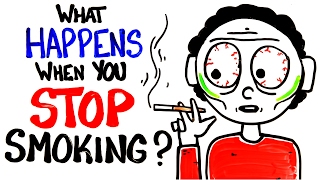
Short Summary
Main recommendation: quit smoking, because the body begins recovering within minutes and many health risks drop substantially over the following months and years. The video walks through a timeline of physiological changes after the last cigarette, from heart rate and circulation in the first hours to lung repair and cancer and heart disease risk over 10 to 15 years.
Key Points
- Within about 20 minutes, heart rate and blood pressure return to normal, and hands and feet warm up again, since nicotine had narrowed blood vessels.
- Cravings, moodiness, drowsiness, tension, and sleep trouble begin around 2 hours, linked to the drop in nicotine-driven dopamine.
- Carbon monoxide clears from the bloodstream around 8 hours, freeing hemoglobin to carry more oxygen, which the video notes matters most for long-term smokers because carbon monoxide exposure thickens blood and raises blood pressure and clot risk.
- Coughing temporarily increases around 24 hours as the lungs clear out toxins, while coronary artery disease risk begins to fall.
- Taste and smell sensitivity start returning around 48 hours as nerve endings regrow, though chronic smokers may have permanently damaged taste buds.
- Nicotine withdrawal peaks at about 72 hours with headaches, nausea, cramps, anxiety, and depression, and the video says the worst is then over.
- Long-term gains include lower type 2 diabetes, cancer, and cardiovascular risk after about 1 month, lung cilia repair in 3 to 9 months, roughly halved heart disease risk at 1 year, halved lung cancer risk at 10 years, and heart attack risk matching a never-smoker at 15 years.
Details Worth Noting
- Concrete instructions: The transcript gives no step-by-step quitting method, product, dosage, or schedule. The only actionable advice is to quit smoking, and the video's stated best prevention is not to start at all.
- The timeline is a general guideline, and the average amount smoked per day or year affects how fully the body recovers.
- Some damage is irreversible, including permanent lung damage and increased susceptibility to certain lung diseases, and some chronic smokers may never fully regain taste.
- The video notes that withdrawal symptoms at 72 hours resemble those from other addictive substances, including caffeine.
- The video notes that over 7,000 chemicals are released each time a cigarette is lit, and that with 1.3 billion people actively smoking, smoking is one of the leading causes of preventable death worldwide.
Bottom Line
Quitting pays off quickly and keeps paying off, but the timeline depends on how much you smoked, and some lung and taste damage may never fully reverse.