digest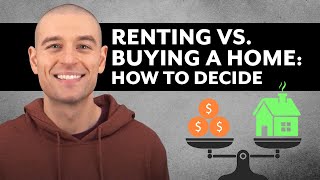
Short Summary
Main recommendation: Renting is often a better choice than buying, both financially and for well-being, and the decision should be based on your lifestyle rather than the belief that owning will make you happy. Owning and renting can produce comparable financial outcomes once the full "user cost" of owning is counted, which the speaker estimates at about 5% of the home's value per year.
Key Points
- Homeowners are not reliably happier than renters: studies controlling for income, health, and housing quality found owners were no better off, and sometimes less happy day to day.
- People overestimate the happiness gain from buying, especially those with extrinsic goals such as money, status, and image, due to hedonic adaptation and buyer's remorse.
- Homes are positional goods, and larger new construction in a suburb can lower neighbors' satisfaction with their own homes and push them toward more debt.
- The true cost of owning includes property taxes, maintenance and depreciation, and the opportunity cost of equity, not just the mortgage.
- Debt is a persistent source of unhappiness, since what we owe predicts happiness more strongly than what we earn, and long commutes cause lasting stress.
Details Worth Noting
- Concrete instructions: To decide, compare the monthly cost of renting an equivalent home with the owner's user cost. Estimate the user cost as roughly 5% of the home's value per year, made up of 1% property tax, 1% maintenance, and 3% opportunity cost of equity (based on an assumed 4% real stock return versus 1% real home appreciation). Divide that annual figure by 12 for a monthly comparison; for a $1 million home, this is about $4,166 per month. If comparable rent is equal or lower, renting is financially equivalent. Aggressive investors would set a higher threshold, and conservative investors a lower one. Include renter's insurance (usually cheaper than homeowner's insurance) and utilities when comparing renting costs.
- Owners lose the flexibility renters have to move easily, and they take on more price risk if they must sell in a falling market, while owners gain protection from rent increases.
- A mortgage creates forced savings, which renters must replicate through discipline, such as consistently making RRSP contributions.
- Primary residence price growth is not taxed in Canada, while a renter investing in a taxable account would have a lower after-tax opportunity cost.
- The speaker cites historical real home price appreciation of roughly 0.2% to 1.1% per year, and maintenance costs of roughly 1% to 2% of value, with Statistics Canada using 1.5% for building depreciation.
- The speaker bought a home after renting for his adult life, citing lifestyle factors (no commute, nearby nature, and no rentals available there) rather than financial motives.
Bottom Line
Buying a home does not guarantee happiness or wealth; the choice should rest on lifestyle fit and a clear comparison of the full cost of owning against renting.