digest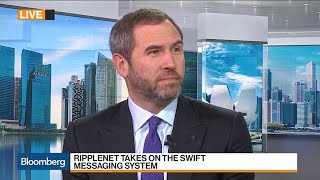
Short Summary
Main recommendation: Ripple CEO Brad Garlinghouse argues that Ripple, through its RippleNet network and XRP digital token, can become a major player in digital assets by solving the real-world problem of slow, expensive cross-border payments, rather than relying on hype. He compares Bitcoin to the Napster of digital assets, a pioneer whose successors will ultimately build the lasting businesses. He presents Ripple's growing bank and payment-provider adoption, and XRP's transaction speed, as evidence that the company is already in production.
Key Points
- Garlinghouse frames the distinction between real value and hype as the most important issue in crypto, and says the "Napster of digital assets" analogy suggests Bitcoin may pioneer the category while later systems solve its original problems legitimately.
- The core problem is cross-border payments: he illustrates it by noting that sending $10,000 to California would most quickly be done by flying the money there, and says Ripple reduces settlement from days to seconds.
- Ripple reports well over 100 customers, including large global banks, payment providers, and money transfer companies such as Western Union and MoneyGram, and says it signs more than one bank a week.
- Volume matters more than bank count: SEB, a large Swedish bank, has processed more than a billion US dollar equivalent through a single Ripple corridor.
- On regulation, he says regulatory uncertainty is overstated, that Ripple has worked with regulators and regulated banks from the start, and that KYC (Know Your Customer) checks at both ends of an XRP transaction provide more certainty than many realize.
- On volatility, he argues that XRP's transaction speed, about a thousand times faster than Bitcoin, limits exposure to roughly three seconds, making the risk small.
Details Worth Noting
- Concrete instructions: The video does not give step-by-step instructions for viewers. The only described process is the live US dollar to Mexican peso corridor: hold US dollars, sell them and buy XRP within about three seconds, transfer the XRP to Mexico, and sell it for Mexican pesos.
- Garlinghouse says the company's last publicly announced customer figure was over 100, and that it signs more than one bank per week, though he stresses volume over count.
- He cites XRP as the best-performing digital asset in 2017, rising roughly 25,000 percent, and attributes the rise to belief that Ripple solves a real problem.
- He says Ripple is "at mile one of a marathon" and early globally, even though production systems already carry real customer transactions.
- The claims about performance, customer counts, and regulatory certainty are the speaker's own statements and are not independently verified in the transcript.
Bottom Line
Garlinghouse's case rests on real bank adoption and transaction speed rather than market excitement, but the video presents his assessments as company perspective, and the outcome for XRP and Ripple remains unproven.