digest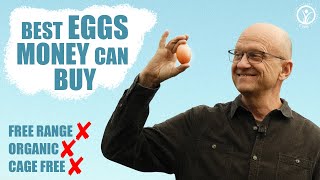
Short Summary
Main recommendation: Choose organic pasture-raised eggs, since the speaker argues they are a near-perfect food with higher nutrition than caged, cage-free, or standard free-range eggs. He also argues that dietary cholesterol in egg yolks is not the health threat it was once thought to be, so the yolk should be eaten.
Key Points
- The video ranks egg types from worst to best: caged/battery, cage-free, free-range, and organic pasture-raised.
- "Organic" alone does not guarantee pasture access; it only means no preventive antibiotics and organically grown feed.
- Pastured hens eat grasses, herbs, seeds, insects, slugs, and worms, and the speaker says this raises nutrient content in the egg.
- The speaker says the body makes most of its cholesterol in the liver, so eating more dietary cholesterol does not raise blood cholesterol because the liver makes less in response.
- Eggs are described as a strong protein source with essential amino acids, omega-3 fats, and most vitamins except vitamin C.
- Pastured eggs are said to contain more vitamin A, twice the vitamin E, and up to six times the vitamin D than conventional eggs.
Details Worth Noting
- Concrete instructions: The speaker gives no step-by-step preparation, dosage, or cooking method. Actionable advice is to look for eggs labeled organic and pasture-raised rather than only "free-range" or "cage-free," since free-range rules vary widely on outdoor time and plot size. To judge lutein content, check the yolk: a bright orange yolk suggests higher lutein from pastured diets, while a paler yolk suggests a conventional egg. Do not discard the yolk, since the speaker says most of the nutrition is there.
- Caged hens are described as living at up to 80 per cage with under a square foot each, and the speaker says antibiotics are used extensively. He says this method was banned in the EU in 2012, yet about 60 percent of the world's eggs are still produced this way.
- The speaker says cage-free barns can still be crowded and windowless, with birds standing in their own feces, which may contaminate feed.
- The speaker cites 1.4 trillion eggs consumed per year worldwide and says cholesterol is needed for brain and cell structure, bile production for fat digestion, and hormone production such as testosterone, estrogen, and progesterone.
- These are the speaker's claims; the transcript does not provide studies, sources, or professional medical guidance, so viewers should consult a qualified health professional about their own diet.
Bottom Line
Among common egg options, the video argues that organic pasture-raised eggs offer the best combination of welfare and nutrition, and that their yolks should not be avoided. The claims rest on the speaker's assertions rather than cited research in the transcript.