 digest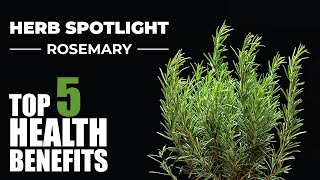
Short Summary
Main recommendation: Rosemary, a woody evergreen herb from the mint family (Lamiaceae), is presented as a plant with five notable health benefits: brain support, antimicrobial and wound-healing uses, hair loss support, stress reduction, and circulation support. The transcript describes these uses but does not provide dosages or clinical guidance.
Key Points
- The five benefits promised by the title, as listed in the transcript: (1) brain tonic for memory and concentration, (2) antimicrobial and wound-healing support, (3) hair loss support, (4) stress reduction via scent, (5) circulation and mild pain relief.
- The speaker says rosemary is known as a brain tonic for its seeming ability to improve memory and concentration, stimulating circulation to bring more oxygen to the brain, and has reportedly been used for elderly dementia patients for years.
- The speaker says rosemary tea compounds may help fight infections due to antimicrobial properties, and that rosemary leaves have long been used in traditional medicine to aid wound healing.
- The speaker cites a study in which 44 percent of people with alopecia areata who rubbed a rosemary essential oil blend into their scalp daily for seven months showed improvement, versus 15 percent in the control group.
- The speaker cites a study in which adults who sniffed rosemary oil for five minutes had 23 percent lower saliva cortisol than those who smelled a non-aromatic compound.
Details Worth Noting
- Concrete instructions: The transcript gives these actionable uses: drink rosemary tea for possible infection support; apply rosemary essential oil (or add it to anti-fungal creams or ointments) for wound healing; rub a rosemary essential oil blend into the scalp once daily, as in the cited study; smell rosemary oil for about five minutes to ease stress. No dosages, concentrations, or dilution guidance are stated.
- The transcript describes rosemary as an evergreen that withstands extreme droughts and mentions the specific acid in rosemary linked to neuroprotective effects, without naming it.
- The hair-loss claim relates to preventing a testosterone byproduct from attacking hair follicles; the study cited involved alopecia areata, while the claim also mentions androgenetic alopecia.
- The stress-related study measured saliva cortisol, and the transcript notes cortisol can have harmful effects on the body.
- The speaker describes rosemary as a mild stimulant and says its pain-relieving effect is mainly due to opening blood flow to the brain.
Bottom Line
Rosemary is presented in the video as a multi-use herb with five possible benefits, supported mainly by traditional use and a few small studies cited by the speaker, so its effects should be verified before relying on it for health purposes.


