digest
Short Summary
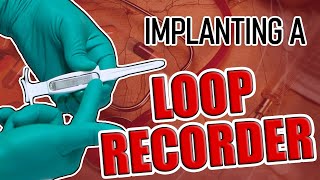
Main recommendation: A loop recorder, a small implantable device placed under the skin of the chest, can be used to monitor heart rhythm remotely and capture abnormal rhythms such as slow pauses, atrial fibrillation, or rapid tachycardia. The speaker presents it as a tool for diagnosing unexplained fainting, dizziness, or palpitations, and for checking whether atrial fibrillation is recurring after treatment. It is inserted under local anesthesia in the office and only transmits data when abnormal rhythms occur.
Key Points
- The device sits just under the skin over the heart and has limited memory, so it stores only abnormal rhythms rather than continuous recordings.
- It is typically used for patients with fainting, lightheadedness, dizziness, or palpitations when an arrhythmia is suspected.
- It helps confirm whether atrial fibrillation is occurring, and how often, including in patients already diagnosed.
- After ablation for atrial fibrillation, it can show whether the rhythm is recurring, which can guide whether blood thinners can safely be stopped.
- Dr. Jamnadas describes a case where the device revealed a stroke patient was having atrial fibrillation, which led him to start a blood thinner.
Details Worth Noting
Concrete instructions:
-
Insertion is done in the office under a small lidocaine block on the chest wall; no stitches are needed.
-
The patient receives a small receiver that plugs into a wall outlet; some devices have a built-in cell phone that automatically transfers data.
-
Data is downloaded through the receiver, and in the speaker's system it can also download automatically at midnight.
-
Some devices have a battery life of about two and a half to three years.
-
If the battery dies, the device can stay in place if it causes no problems, though the speaker often removes it under a little anesthesia through a small cut.
-
Examples cited include a patient with pauses greater than 3 seconds who later needed a pacemaker, and a patient whose six-month monitoring showed no atrial fibrillation, allowing blood thinners to be stopped.
-
The speaker frames the device, in his experience, as having little inconvenience.
Bottom Line
A loop recorder is a small, long-running monitor that captures heart rhythm abnormalities that may otherwise go unnoticed, and it can guide decisions about pacemakers or blood thinners. This is the speaker's description of his own practice and is not individualized medical advice.