digest
Short Summary
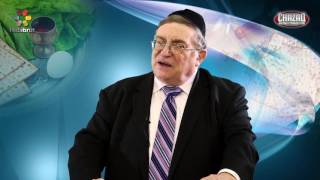
Main recommendation: Rabbi Krohn urges listeners to stay resilient, keep faith, and pass these values on to children and grandchildren, even when life is hard. The talk moves from a Passover seder anecdote about holding a young grandchild to reflections on Jewish survival, insensitive comments, and the need to keep dreaming and building.
Key Points
- Sitting a young child on your lap during the seder, and the emotion that comes with it, is presented as a meaningful way to connect the next generation to tradition.
- The speaker contrasts Jewish life in countries that are described as free, such as America, Canada, and England, with the risks of assimilation, citing a claim that fifty percent of Jewish marriages are with non-Jews.
- Insensitive remarks can hurt even when meant as jokes; the speaker recounts a comment made to him while he was in the hospital, which he later chose to let go.
- The talk closes by tying survival and the Holocaust legacy to the responsibility of each person to keep building and dreaming.
Details Worth Noting
- Concrete instructions: The transcript gives no step-by-step method. The actionable advice is to include children and grandchildren at the seder, to tell the next generation what the seder and Jewish history mean, to be sensitive in speech, and to keep dreaming and building.
- The speaker's grandson, Avraham, was three years old when he asked to sit on the speaker's lap during the seder (the transcript's phrasing is garbled but this detail is given).
- The speaker describes seeing at a bris/celebration a lavish spread including matzah, a bagel platter, meat platter, and cheese platter, citing it as a sign of how free and prosperous Jewish life in America has become—paired with his concern about assimilation.
- The speaker says he was shot up with morphine in the hospital and could not move his legs when someone made the insensitive comment, and that the person later called to apologize.
- The transcript is partly garbled and some claims, such as the marriage statistic, are stated by the speaker without supporting evidence.
Bottom Line
The core message is that the next generation should be carried forward through family ritual, careful speech, and continued resilience, while the speaker's specific claims about assimilation and free societies remain his own opinions rather than established facts.