 digest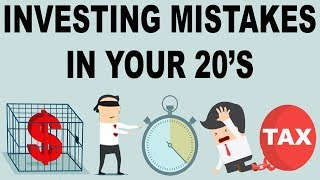
Short Summary
Main recommendation: Start investing in your 20s as early as possible, since money invested early benefits far more from compound interest, and avoid the common mistakes of not investing, blindly copying others, timing the market, letting emotions drive decisions, and ignoring tax-advantaged accounts. Graham Stephan says these habits, while easy to fall into, can cost tens or hundreds of thousands of dollars over a lifetime, according to his own estimate.
Key Points
- The five investing mistakes to avoid in your 20s, as listed in the video: (1) not investing at all, (2) copying someone else's investment strategy without fully understanding the investment, (3) timing the market, (4) getting too emotional or attached to investments, and (5) not using tax-advantaged accounts.
- Compound interest makes early investing powerful: according to Stephan, $1 invested at age 20 at a 7% return grows to about $15 by age 60, while $1 invested at age 40 grows to only about $3.87.
- Copying others is risky because people have different ages, resources, and risk tolerances, and you may enter or exit at different prices than the person you copy.
- Timing the market is unreliable. Stephan cites that missing the 5 best trading days over 20 years cuts overall return by 45%, missing the best 10 days cuts it by 67%, and missing the best 20 days cuts it by 91%.
- Emotional investing, driven by fear of loss and ego, leads people to panic-sell or hold losing stocks too long.
Details Worth Noting
- Concrete instructions:
- Start investing as soon as possible in your 20s rather than waiting.
- Only invest in companies and investments you fully understand, and do your own research before buying anything someone else recommends.
- Use a buy-and-hold strategy rather than trying to time market dips and peaks.
- Treat price drops as a possible buying opportunity, like a sale, instead of panic-selling, and focus on fundamentals.
- Look up whether your employer offers a 401(k) match and contribute at least enough to get the full match, since Stephan calls it essentially free money.
- Consider contributing up to $6,000 per year to a Roth IRA, a figure Stephan cites as the contribution limit at the time.
- Consider a Health Savings Account (HSA), which reduces taxable income from contributions and allows tax- and penalty-free withdrawals for health-related expenses, with unused money rolling over year to year.
- Stephan notes that these mistakes are not permanent and that most people make at least one of them and learn from it.
- The "avocado toast" argument refers to people choosing present spending over saving, which Stephan says can set you back tens or hundreds of thousands of dollars.
- Stephan frames his stock-market return figures as supported by studies he said he would link in the video description, which were not shown in the transcript.
Bottom Line
The biggest lever in your 20s is time: start investing early, keep it simple with buy-and-hold, and use tax-advantaged accounts like employer 401(k) matches, Roth IRAs, and HSAs to keep more of what you earn.




