 digest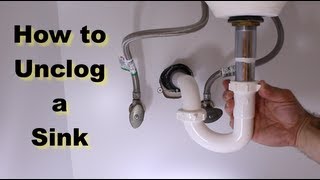
Short Summary
Main recommendation: To unclog a slow-draining bathroom sink, remove the P-trap and pop-up stopper, clear both the trap and the drain line with a Zip It tool or drain auger, then reassemble and check for leaks. The method is a hands-on, tool-based cleanout rather than a chemical fix, and the speaker says most sink clogs sit in these removable parts and the drain in the wall behind them.
Key Points
- The P-trap holds standing water so sewer gas cannot enter the bathroom, which is why it must be emptied into a container before removal.
- Hair and gunk commonly collect on the pop-up stopper rod and in the gooseneck, so these parts need inspection, not just the trap.
- The Zip It tool, which the speaker says costs about three dollars at a hardware store, works for pulling out debris from the drain.
- A drain auger with a spring tip can reach farther down the drain line and into the wall pipe.
- Paper towels pushed through the pipes with a snake or auger help scrape residue off the pipe walls.
Details Worth Noting
- Concrete instructions:
- Place a Tupperware container or bucket directly under the P-trap, and put a towel down under your work area.
- Loosen the two slip nuts by hand; if they won't turn, use channel locks sized to fit the nut.
- Let the water drain into the container until it slows, then remove the whole P-trap.
- Remove the pivot arm by loosening its nut with channel locks or a crescent wrench, then pull the arm out and inspect it.
- Pull up on the pop-up stopper to remove it and check for goop on the rod.
- Insert the Zip It tool or drain auger into the drain, work it around, and pull out debris.
- For the drain auger, unlock the spring end, feed it into the drain line, and clean the pipe as far as you can reach.
- Push a folded paper towel through the removed P-trap, gooseneck, and stopper to clean their insides.
- For the wall drain, push the auger in until it meets resistance, lock it, then spin it by hand or with a drill attachment before pulling it out.
- Reassemble in reverse: seat the gooseneck into the wall with the washer flush, hand-tighten the nuts, then give each plastic slip nut about a quarter turn with channel locks.
- Insert the pivot arm through the stopper hole, hand-tighten the nut, then turn it a half to quarter turn with channel locks.
- Run water for a minute or two and check every slip nut and the pivot arm connection for drips.
- The speaker recommends a 'Zip It' tool and a drain auger, and says he personally prefers the auger for the wall pipe.
- The speaker says the gooseneck is named that because of its shape.
Bottom Line
Clearing a slow bathroom sink is mostly a matter of removing the trap and stopper, then clearing each section by hand and with a snake, so the blockage is found at its source.


