digest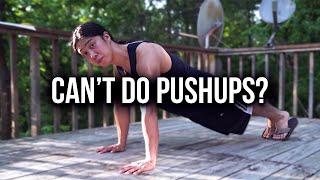
Short Summary
Main recommendation: Build up to a full push-up by choosing a push-up variation you can do with good form, practicing it once or twice a week for two to three sets until you reliably hit goal standards, then progressing to a harder variation. The progression runs from wall push-ups to incline push-ups, advanced incline push-ups, knee push-ups, and finally full push-ups, with transition steps for those who stall between knee and full push-ups.
Key Points
- Hybrid Calisthenics frames push-up progression like weights on a barbell: start with a version you can already control, then add difficulty as strength grows.
- Form is treated as flexible, but the speaker stresses controlling shoulder position, elbow flare, and body alignment, especially keeping the lower back neutral.
- Easier variations are not meant to show strength; they help you learn to move with good form and control rather than being limited by weakness.
- Knee push-ups carry stigma, but the speaker argues they are a valuable strength exercise, especially when returning from injury.
- Filming yourself and comparing form across variations is recommended to avoid sacrificing form as exercises get harder.
Details Worth Noting
- Concrete instructions:
- Pick a variation you can do with good form, and practice it once or twice a week for two to three sets.
- Move to the next harder variation only after you reliably hit the goal standards for sets and reps.
- Wall push-ups: stand about arm's length from a wall, hands slightly below shoulder width, feet together (or spread for more stability). If wrists hurt, try hands slightly lower or higher and stand closer to the wall.
- Incline push-ups: use a table or railing at around chest or torso height, leaning further forward than wall push-ups. Make sure it is secure; avoid glass or fragile surfaces.
- Advanced incline push-ups: use a chair or stool that is secure and will not slide. Film yourself doing a known-easy variation for 5 to 10 reps, then film advanced incline push-ups and check whether form is fundamentally the same.
- Knee push-ups: once you hit goal standards, move toward full push-ups.
- Transition from knee to full push-ups: lower like a full push-up and come up from the knees, controlling the descent. Alternatively, go into the bottom of a push-up position, push up as hard as you can, hold 6 to 10 seconds, rest 20 to 30 seconds, and repeat.
- Once you can stay a few inches off the ground, hold that position for time before attempting to move up.
- Form cues: keep shoulders back and down to feel the chest more; elbows tucked about 30 degrees (45 for wider); keep a straight line from head to feet with abs tight and neutral lower back.
- The speaker notes that many people feel stronger chest engagement with shoulders back and down, and that tucking elbows may ease shoulder pain.
- Over-tilting the pelvis forward is cited as a common cause of lower back pain during push-ups.
- Ask yourself whether you can keep your core tucked and move your arms the way you want before advancing; this is presented as a readiness check.
- Full fitness routine details are referenced in the video description, which the speaker says is free.
Bottom Line
Progress gradually through push-up variations, prioritizing controlled form and consistent practice over jumping to harder versions, and use filming to confirm your form holds as the difficulty increases.