digest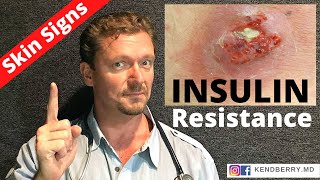
Short Summary
Main recommendation: If you have one of several common skin conditions (such as acne, rosacea, eczema, psoriasis, skin tags, or acanthosis nigricans), ask your doctor to test for insulin resistance, hyperinsulinemia, or metabolic syndrome, and if these are confirmed, consider a very low carbohydrate diet. Dr. Ken Berry, a family physician, argues that chronically high insulin levels are a root cause behind these conditions and that they can be improved by reducing it.
Key Points
- The video's promised list of 7 skin signs of insulin resistance is: 1) early onset male pattern baldness, 2) skin tags (three or more that are medium to large), 3) acanthosis nigricans (brown or dark skin on the back of the neck, under the arms, or in the groin), 4) hidradenitis suppurativa (chronic, recurring lesions in the armpits or groin), 5) acne, especially moderate to severe acne in teenagers and people in their 20s, 6) rosacea, which can progress to rhinophyma, 7) eczema (atopic dermatitis) and psoriasis.
- Insulin resistance, metabolic syndrome, and hyperinsulinemia are presented as essentially interchangeable, all describing chronically elevated insulin in the bloodstream.
- Young and slender people can also have insulin resistance, so age and body weight should not rule it out.
- The video says all of these skin conditions are either caused by or made worse by a high carbohydrate diet.
Details Worth Noting
- Concrete instructions: Ask your doctor to order three lab tests: (1) hemoglobin A1c, a three-month average of blood sugar; (2) C-peptide, a proxy for how much insulin the pancreas produces each day; (3) fasting insulin, which is elevated if the pancreas excretes large amounts of insulin daily.
- Concrete instructions: If the tests show insulin resistance, hyperinsulinemia, or metabolic syndrome, start investigating and implementing a very low carbohydrate diet. Options described are a ketogenic diet (keto), a ketovore diet (mainly fatty meat with a little vegetables), or a full carnivore diet, with the goal of lowering carbohydrates enough for insulin to return to normal.
- Concrete instructions: Bring printed research on your specific skin condition (the video says links are in the show notes) to the doctor when requesting the tests.
- Skin tags: one or two tiny ones may not be significant, but three or more that are medium to large suggest some degree of insulin resistance, according to the speaker.
- Teenagers or people in their 20s with a substantial or severe case of acne should have these tests checked as soon as possible, rather than waiting until middle age.
- Dr. Berry says he has rosacea and reports that his rosacea went away after he addressed his own insulin resistance. This is his personal account, not a controlled finding.
- The speaker presents these claims as his clinical view; the video does not provide specific study citations within the transcript itself.
Bottom Line
Persistent or severe skin conditions may be linked to insulin resistance, so testing for it could help identify an underlying driver, and dietary changes are the video's proposed approach to addressing it.