digest
Short Summary
Main recommendation: there is no universal right answer to rent versus buy; the choice depends on your personal situation, local market conditions, and a true comparison of out-of-pocket costs. In the video's example, renting ($18,000 per year) and buying (about $18,000 per year in effective out-of-pocket cost, before investment income) come out roughly even, and with investment income on the down payment, renting edges ahead for that year.
Key Points
- The video's central framework is to compare annual out-of-pocket costs: rent on one side versus, for buying, effective interest cost, property tax, and upkeep.
- Buying ties up the $100,000 down payment, which forgoes investment income; renting leaves that money invested and able to earn a return.
- Under the example assumptions, the comparison favors renting for that year, but the result shifts with home price, interest rate, rent level, and investment return.
- Buying offers stability (you are unlikely to be forced to move as long as you keep paying), protection from rising rents, and freedom to customize the home.
- Renting offers flexibility, lower transaction costs (buying and selling carry significant fees, especially brokerage), and time to learn a neighborhood before committing.
Details Worth Noting
- Concrete instructions: Build your own comparison by listing the annual rent for a comparable home; for buying, add the effective interest cost (interest paid minus the tax savings from the mortgage interest deduction, where available), annual property tax, and annual upkeep; then subtract any investment income you would earn on the down payment if you rented, and compare the two totals. The video recommends using a spreadsheet for a detailed analysis, since mortgage interest changes over the life of a standard amortizing loan.
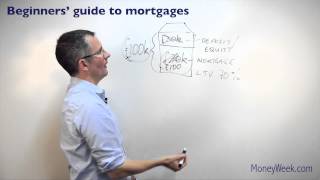
- The example assumed a $400,000 house, $100,000 down, a $300,000 loan at 6 percent interest-only, a 1 percent property tax ($4,000 per year), roughly $2,000 per year in upkeep, and a tax savings of about one-third of the interest, leaving about $12,000 effective interest cost.
- The example assumed a 2 percent return on the $100,000 ($2,000 per year), reducing the renting-side out-of-pocket cost to $16,000 per year.
- The narrator notes a mortgage can act as forced saving, and renters could achieve something similar by saving the difference between their rent and buying costs in an investment account.
- The narrator mentions the 2003 to 2008 period as an example of housing prices becoming out of line with rents during a bubble, and says the framework is meant to help viewers think through the decision rather than give a fixed answer.
Bottom Line
Run the numbers for your own situation before choosing, because the same house can favor renting or buying depending on interest rates, prices, rents, and what your down payment could earn elsewhere.