digest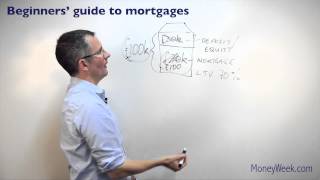
Short Summary
Main recommendation: If you can afford it, choose a repayment mortgage over an interest-only mortgage, and borrow as little as possible relative to the property value to secure a better rate. A mortgage is a secured loan, so the bank can seize and sell your property if you fail to keep up repayments, which is why its interest rates are lower than unsecured loans like car loans, credit cards, or store cards. The video is a beginner's introductory guide to the key mortgage terms and decisions.
Key Points
- Loan to value (LTV) is the loan amount as a percentage of the property's value; a £70,000 loan on a £100,000 property gives an LTV of 70%. The higher the LTV, the harder the loan is to get and the higher the interest rate tends to be.
- Negative equity occurs when a property's value falls below the amount owed. The example given is a £100,000 loan on a property that drops to £90,000, which can leave you unable to move.
- Interest-only mortgages have lower monthly payments, but you must separately build a vehicle (such as an equity-based product, once called endowment mortgages) to repay the full capital at the end, and it can fall short if markets drop.
- Repayment mortgages cost more each month but reduce the capital every month, so they clear the debt after the term, typically 20 to 25 years, provided you keep your job and keep up repayments.
- Watch for traps: arrangement fees, low introductory deals that revert to the higher standard variable rate (SVR), and redemption penalties for leaving early.
Details Worth Noting
- Concrete instructions: Before choosing a mortgage, work out how much you need to borrow, which depends on your deposit versus the property price, since borrowing less generally gets a better deal.
- Concrete instructions: Choose between interest-only and repayment, and between a fixed rate (certainty) and a variable rate (payments can fall if rates fall, but rise if they rise).
- Concrete instructions: Compare mortgage rates on sites such as MoneySavingExpert and MoneySupermarket, and compare total cost, not headline rate: a 3% deal with a large arrangement fee (the example given is £1,000 to £2,000) may cost more than a 5% deal with no fee.
- Concrete instructions: Check the rate after any introductory period ends, because you may be moved onto the SVR, which is typically both variable and higher.
- Concrete instructions: Check redemption penalties before signing, since they can be charged if you need to switch, move, or exit a deal early.
- Mortgage rates at the time of the video were around 4% to 5%, depending on the period, while unsecured store card loans could cost up to 30%.
- Before the 2007 financial crisis, some lenders offered LTVs above 100%, even up to 125%, which the speaker describes as a trap that left many borrowers in negative equity.
Bottom Line
A mortgage's lower rate comes from the security it gives the lender, so the real decision is how much to borrow, whether to repay capital from the start, and what the total cost of each deal is once fees and post-introductory rates are included.