digest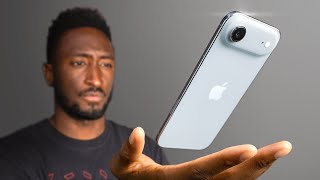
Short Summary
Main recommendation: The iPhone Air is a noticeably thinner and lighter iPhone that is impressively durable, but its trade-offs (weaker speakers, eSIM-only, a single camera, less cooling, and a weak battery) make it a poor fit for heavy users who rely on cameras or battery life. Reviewer Marques Brownlee says it suits casual users, especially those who use only the main camera and don't need long battery life.
Key Points
- Apple thinned the phone by moving compute, memory, and logic board into a raised "plateau" on top, leaving the bottom mostly for battery, and used a shiny titanium frame that is very durable but shows fingerprints.
- The only speaker is the earpiece at the top; the bottom grills are microphones only, so sound is quieter, tinnier, and lopsided in landscape.
- The camera trade-off is significant: there is one main camera with no Ultra Wide, no telephoto zoom, and quality drops noticeably past about 5x zoom, though the main camera is very good.
- The battery is weak for a brand-new phone: about 15% left in Low Power Mode after roughly four hours of screen-on use, with slower charging than the rest of the iPhone 17 lineup.
- Durability is a surprise strength, with IP68 resistance, a titanium frame that bends and snaps back, and Ceramic Shield 2 that resists scratches better than previous versions.
Details Worth Noting
- Concrete instructions: No step-by-step setup is given, but the actionable advice is to skip the Air if you rely on zoom or Ultra Wide photography or need strong battery life for heavy use; consider it if you are a light user, your battery needs are modest, and you mainly shoot with the main camera. He notes the Apple MagSafe battery ($100, sold separately) only charges the phone to about 65% and isn't a great accessory.
- eSIM-only frees space for battery (Apple has not confirmed the exact gain; the reviewer estimates around 200 mAh), but it can frustrate people who switch phones often, since physical SIMs will not transfer.
- The Air lacks mmWave 5G, which is rarely used, while the new C1X modem, N1 networking chip, Wi-Fi 7, Bluetooth 6, and Thread performed well with no speed or coverage weakness, though the USB-C port is limited to USB 2 speeds.
- Heat is a concern: without the Pro phones' vapor chamber and aluminum body, the back gets warm under sustained use, likely throttling the A19 Pro chip, though it never overheated.
- The phone is repairable enough to earn a 7/10 from iFixit, keeps dual-entry for front and back glass, and Apple published disassembly guides on day one.
- The reviewer sees the Air as a preview of a future foldable iPhone, with the thinning work and N1/C1X chips aimed at making a folding form factor possible.
Bottom Line
The iPhone Air is a striking, durable, and light phone that suits casual users who mainly use the main camera, but its battery and camera limits make it a risky buy for heavy users and a poor long-term choice if you expect strong battery life years from now.