digest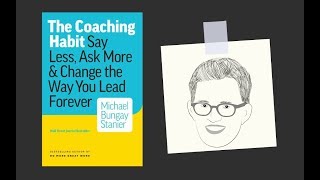
Short Summary
Main recommendation: Coach others by asking good questions rather than giving advice, using four questions: "What's on your mind?", "What else?", "What's the real challenge here for you?", and "If you're saying yes to this, what are you saying no to?" The video frames this as the central habit from Michael Bungay Stanier's book The Coaching Habit, aimed at helping friends, teammates, or employees work through stressful situations.
Key Points
- Advice-giving lowers the other person's status and strips them of the confidence needed to make their own decisions, which is why the speaker argues questions work better.
- "What else?" acts as a pressure relief valve, prompting people to open up and surface uncomfortable issues; Stanier says it creates more wisdom and self-awareness than any other question.
- "What's the real challenge here for you?" helps the person identify the one challenge whose resolution would provide the greatest relief, rather than focusing on petty issues.
- The word "you" makes questions easier to answer, citing a 1997 study where students solved math problems faster and more accurately when "you" was included.
- The fourth question turns a chosen challenge into a strategy by revealing what must be given up, since saying yes to one priority means saying no to something else.
Details Worth Noting
- Concrete instructions: When coaching someone under stress, first ask "What's on your mind?" to skip small talk and surface what is provoking anxiety or keeping them awake. Follow up with "What else?" until the list of issues is exhausted. Then ask "What's the real challenge here for you?" to isolate the one challenge that would relieve the most stress. Finally, ask "If you're saying yes to this, what are you saying no to?" to identify what to stop doing, such as meetings, distractions, social media, TV, or weekend plans, in order to make space for the challenge.
- The speaker suggests that when someone insists on minor issues you know won't matter in a week, you can say, "That sounds like a challenge, but what's the real challenge here for you?"
- The speaker, who says he uses these questions to journal and coach himself when stressed, notes that the real challenge is often the one a person is avoiding most.
- The "What else?" question is noted as the one that creates the most insight, but the speaker warns it can flood you with a long list, so resist jumping to advice and instead ask about the real challenge.
- The fourth question is tied to business coach Michael Porter's line that the essence of strategy is choosing what not to do.
Bottom Line
Effective coaching under stress comes from asking, not telling, and the four questions give a repeatable sequence for moving someone from overwhelm to a committed, prioritized next step.