digest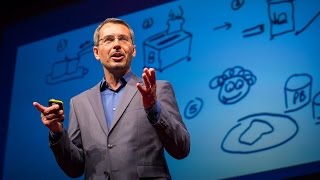
Short Summary
Main recommendation: To solve complex ("wicked") problems, collaboratively draw them out as systems of nodes and links, iterating with movable cards in a group, as practiced in the "draw how to make toast" exercise. Visualizing a problem as five to 13 nodes, refined repeatedly, produces clarity, alignment, and better models than individual thinking or typical meetings.
Key Points
- The exercise has three stages: draw how to make toast alone with a marker, redo it with sticky notes or cards, then draw it as a group.
- Drawings are systems models made of nodes (tangible objects like toasters or people) and links (connections between them), which reveal each person's mental model.
- The sweet spot for clarity is between five and 13 nodes; fewer feels trivial, and more than 13 causes "map shock."
- Movable cards enable fast iteration, which the speaker says is the only real route to clarity, and group models synthesize several viewpoints into a more comprehensive model.
- Silent group drawing works better and faster than talking, which the speaker says gets in the way.
- A Rodale example: after a three-day visualization of their business, the executive team reportedly reclaimed $50 million in revenue and moved from a D to an A customer rating.
Details Worth Noting
- Concrete instructions: Take a clean sheet of paper and a felt marker, and draw how to make toast without using any words. Then redo the drawing with sticky notes or cards, rearranging them like Lego blocks as you refine the steps. Finally, have a group build one shared drawing, letting people build on each other's nodes, and do it in complete silence if possible. For a real problem, start with a question, collect the nodes, refine them, repeat the cycle until patterns emerge, and then answer the question. Aim for five to 13 nodes when communicating visually, and expect groups to add branching and parallel patterns as complications arise.
- Cultural differences were illustrated: Americans typically draw a toaster, many Europeans draw a frying pan, and many MBA students draw a fire.
- Typical drawings contain four to eight nodes, while group models can reach 20 or more nodes without participants feeling overwhelmed, because they helped build them.
- The speaker notes that the ease of changing a representation correlates with willingness to improve the model, which is why cards outperform static drawings.
- Practical resources: the speaker produced a site, DrawToast.com, with best practices for running a workshop, guidance on the visual language of links and nodes, and downloadable templates for unpacking thorny problems.
Bottom Line
Visible, movable, and collaboratively built diagrams turn tangled organizational problems into shared understanding and action, and the speaker presents this as a practical method anyone can try.