digest
Short Summary
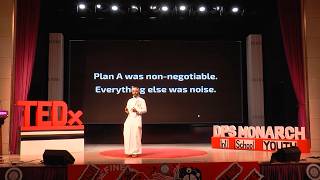
Main recommendation: schools should measure holistic skills such as curiosity, leadership, communication, and life skills, not only academic marks, and treat them as mandatory rather than "extracurricular." Speaker Sumanth Prabhu MG argues that calling these skills optional signals to children that they do not matter, and that the claim they cannot be measured is false based on his company's work with more than 850 institutions.
Key Points
- Sumanth Prabhu MG recalls a Sanskrit teacher telling him he had "a heart of a lion," a remark that shaped his later decision to start his own company.
- A survey he cites found that 93% of students could name only seven popular careers, out of more than 250 dignified, payable careers in the country.
- Schools promise holistic education in brochures but measure mainly attendance, marks, and toppers, while skills are labeled "extracurricular" and treated as optional.
- Children read these signals: what is measured is taken seriously, and what is called optional is not.
- Across three years of work, his company found that skills like web and mobile app building, life skills, data science, and communication could be evaluated and scored.
Details Worth Noting
- Concrete instructions: The speaker gives no step-by-step procedure for schools. The actionable advice is to measure the skills schools already claim to build (curiosity, leadership, communication) continuously throughout the year across multiple skills, rather than only through marks.
- Concrete instructions: Schools do not need an extra timetable period or a Friday afternoon for these assessments; the change is in what is measured, not in added time.
- Concrete instructions: Teachers and adults should deliberately tell students which strengths they see in them, as the Sanskrit teacher did, rather than leaving such recognition to chance.
- In one year alone, 25,000 students built working web and mobile applications, and more than 30,000 built life-skills projects, all evaluated and scored, according to the speaker.
- The financial literacy project showed that when students had to explain money to others, they practiced and improved communication as well as money knowledge.
- Continuous measurement across skills narrowed the apparent gap between students who scored 100 and 80 marks, which the speaker says makes the 20-mark difference meaningless.
Bottom Line
Schools that claim holistic education should measure the skills they promise, because students and parents read what is measured as what matters.