 digest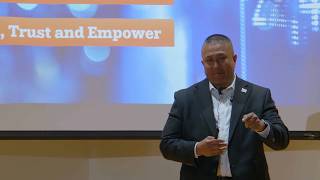
Short Summary
Main recommendation: Lead as a "kind leader" by building trust through three pillars: lead by example, lead with empathy, and listen, trust, and empower. Speaker Russell "Haj" Ramos illustrates these pillars with a story about turning a disengaged, long-tenured employee into a standout contributor through one-on-one attention and public recognition.
Key Points
- Lead by example: demonstrate business values, work ethic, and strength through consistent actions rather than words.
- Lead with empathy: understand others' responsibilities, capabilities, and challenges, which builds stronger relationships and teams.
- Listen to understand, not just hear, then trust people's abilities and empower them to take ownership and accountability.
- Adapt your approach to different team personalities: high-performing "rock stars" need space, nudged "directed" workers need guidance, and quiet "silent assassins" often hold the best ideas and need encouragement to share them.
- Frequent one-on-one meetings (biweekly in the speaker's case) let leaders learn each person's strengths ('superpower'), projects, and aspirations.
Details Worth Noting
- Concrete instructions: Hold recurring one-on-one meetings (the speaker used biweekly check-ins) to learn each person's work, "superpower," and current projects. Discuss their 30-60-90 day plan (what they will do in 30, 60, and 90 days) and their aspirations, and make time for personal conversation if possible. Listen to understand, then give people real ownership of tasks, and recognize their work publicly, for example by giving them a visible platform such as a presentation or brown bag lunch on their expertise. Use gratitude, a heartfelt thank-you, as a low-cost way to strengthen relationships with teammates, friends, and parents.
- The speaker says he meets people in person when possible, and during COVID used Microsoft Teams for his one-on-ones.
- Story example: a long-tenured employee nearing retirement initially joined meetings in a hat and sweatshirt; after consistent check-ins and trust, he changed his presentation, took on projects, and later gave a well-received cybersecurity brown bag lunch. He later named the speaker as one of five people who impacted his life at the agency over his 27-year career.
- The speaker's advice is that the pillars may not work for everyone, so you can try one, two, or all three.
Bottom Line
Kind leadership is a practical, consistent habit: model the behavior you expect, understand people well enough to empower them, and let genuine gratitude reinforce it.


