digest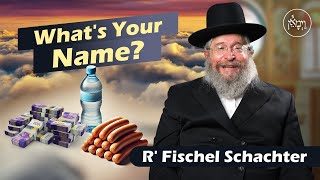
Short Summary
Main recommendation: Close your eyes and answer the question "What's my name?" in moments of crisis, because that inner stillness is the currency that matters, not money or credit cards. The speaker, Rabbi Fischel Schachter, presents this through anecdotes about a currency mix-up in Switzerland and a frightening roadblock in Chevron. He argues that when everything else fails, identity and calm are what carry a person through a nisayon (test).
Key Points
- The speaker's central point is that material wealth, including $100 bills, is useless in the next world and sometimes even in this one, since a Swiss shop refused US dollars and only a credit card worked.
- The "Vayimaen" (the moment of closing your eyes) is presented as the real currency, described as "diamonds" and "off the charts."
- He ties the idea to the Hebrew word "Vayimaen," linking it to a moment of closing one's eyes and reflecting, and frames it as the true spiritual asset.
- During a tense roadblock in Chevron, the speaker says he felt an unusual calm, which he attributes to Hashem giving strength in a crisis.
- He jokes that he didn't understand the Schweizerdeutsch introduction and humorously speculates the MC may have been complaining about him, but he simply got up when he heard his name.
Details Worth Noting
- Concrete instructions: The speaker gives no step-by-step method. The only actionable advice is to close your eyes and ask yourself "What's my name?" during a nisayon, and to remember that your true identity is your reserve in a crisis.
- The Swiss setting: The speaker was in Switzerland for a speech after a full Shabbos of speeches in Florida, and the Shul was selling Aliyos in Swiss francs, which initially confused the speaker.
- The Chevron incident: The speaker and his wife took an Arab taxi from the Kosel to Chevron, were stopped at a roadblock with guns pointed at them, and were asked to show passports and step out of the car.
- The speaker says he mentioned having an uncle on the Foreign Relations Committee, though he isn't sure if that's what got them released (it may have been unrelated); his wife was alarmed by the claim, and people later jokingly asked if he had fainted during the ordeal.
- He notes the bottom line in the story is that Hashem provides a "Ko'ach" (strength) in a crisis, which he credits for his calm.
Bottom Line
Your true worth in a crisis is measured by your inner identity and your ability to stay calm, not by money, credit, or connections.