 digest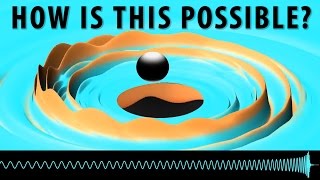
Short Summary
Main recommendation: The video's central answer is that detecting gravitational waves is possible only through a combination of extreme engineering and quantum-level precision, as demonstrated by LIGO (the Laser Interferometer Gravitational-Wave Observatory). The waves stretch space by only about one part in 10^21, so N/A.
Key Points
- Gravitational waves come from merging black holes; N/A.
- The measurement is tiny: the arms of the interferometer change length by at most 10^-18 meters, which the video compares to measuring the distance to Alpha Centauri and detecting variations the width of a human hair.
- Two detectors are built far apart so that local noise (appearing at one site only) can be distinguished from a gravitational wave (passing through both sites nearly simultaneously).
- The laser must be extraordinarily stable (about one part in 10^20 in wavelength) and deliver 1 megawatt of power, because light is quantized into photons and more photons reduce the statistical uncertainty.
- The arms are evacuated to a trillionth of atmospheric pressure, a process that took 40 days, so that air molecules cannot interfere with the light.
- Detection works by timing: N/A
Details Worth Noting
- Concrete instructions: The video does not give a step-by-step procedure for a viewer to follow. The actionable method it describes for detection is: use two widely separated detectors, measure over the longest possible arms (4 km), keep the laser wavelength fixed and stable, use high laser power to minimize shot noise, pump the arms to near-vacuum, and continuously inject fresh light so that interference changes over time can be read.
- The mirrors weigh 40 kg (90 lb), are the smoothest ever made, and are suspended by silica threads about twice the thickness of a human hair to isolate them from vibration.
- N/A
- The main current sensitivity limit is quantum mechanics, described through the Heisenberg uncertainty principle. Designers exploit the fact that only one quantity (the difference between the arms) needs to be measured precisely, so quantum uncertainty is pushed into a different quantity that is not needed.
- N/A
Bottom Line
Detecting gravitational waves was an engineering feat that depended on controlling light, vacuum, vibration, and quantum noise to a degree that seemed impossible shortly before the first detection.




