digest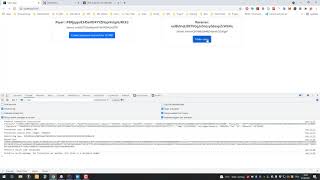
Short Summary
Main recommendation: Use XRP Ledger payment channels for high-volume, frequent micropayments, since the payer locks funds on-chain once and then sends off-chain signed claims that the receiver redeems later. The speaker demonstrates this hands-on with a 10 XRP channel, showing that the off-chain payments are not limited by the ledger's transactions-per-second rate. The speaker says the approach was tested in 2011 and could handle around 70,000 transactions per second, a figure he attributes to that test rather than something he independently verified.
Key Points
- A payment channel starts with an on-chain "payment channel fund" transaction in which the payer locks an amount (for example 10 XRP) for a specific receiver.
- Each new payment is a cumulative signed authorization off-chain; the receiver stores the latest signature rather than settling each payment on the ledger.
- The receiver settles by submitting a payment channel claim transaction on-chain with the latest signature, which releases the promised amount.
- Because microtransactions avoid the ledger, the speaker says they are not constrained by the ledger's throughput limit, which he states is up to 1,500 transactions per second.
- The speaker compares the concept to Coil's Web Monetization as an example of microtransaction use.
Details Worth Noting
- Concrete instructions:
- Create the channel: call the payment channel create function with an amount of 10,000,000 drops (10 XRP), the receiver's address as destination, a settle delay of 10 minutes, and the payer's public key.
- Authorize a payment: have the payer generate a signature for the channel ID with a cumulative amount, for example 1 XRP first, then 2 XRP, then 5 XRP plus 432,405 drops, sending each new signature to the receiver as it is created.
- Claim: the receiver submits a payment channel claim transaction using the channel ID, the latest signature, and the total authorized amount, then the funds are settled on-chain.
- Verify the result: after claiming (in the demo, 5.43 XRP), the balance updates on-chain and the channel closes, with the remainder returned to the payer.
- The speaker says the hard part in practice is the off-chain communication: delivering signatures to the receiver and verifying each claim.
- In the demo, both parties ran on the same computer, so the signature transfer was simulated rather than sent over a network.
- The speaker says he spent many hours setting this up and found it exhausting, and he calls the approach "battlefield tested."
Bottom Line
Payment channels let two parties move many small XRP payments off-chain and settle the final amount on-chain, which is the approach to use when transaction volume is too high for normal ledger payments.