 digest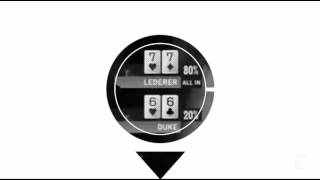
Short Summary
Main recommendation: When making high-stakes decisions under uncertainty, judge the quality of your decision process by probabilities rather than by the outcome, because a good choice can still lose. Poker pro Annie Duke argues that you should map out the possible futures, estimate how likely each is, and pick the option with the best odds over time.
Key Points
- Life, like poker, involves betting on the future with limited information, so certainty is rarely available.
- A decision is not "smart" or "stupid" based on whether it succeeded; it is judged by whether it had the highest probability of success.
- Losing a single hand does not mean the decision was wrong, since the best-odds option wins more than it loses over many trials.
- Accepting uncertainty, rather than fighting it, is presented as a path to better emotional well-being.
- Duke illustrates this with her 2004 World Series of Poker final, where she bet big on a pair of sixes against her brother Howard Lederer, who became a four-to-one favorite with a pair of sevens, but Annie ultimately won the hand with a full house.
Details Worth Noting
- Concrete instructions: When facing a big decision, (1) focus on the quality of your decision-making process rather than the result; (2) imagine all the possible outcomes that could occur, for example "he folds, he calls and I have the best hand, he calls and I have the worst hand"; (3) estimate which outcomes are more or less likely; (4) choose the option with the highest probability of success across all those outcomes; (5) after the result, evaluate whether the process was sound instead of saying "I should have known."
- Duke's poker example: she held a pair of sixes, bet a large opening amount of seventy thousand, saw her brother had a pair of sevens (a four-to-one favorite for him), and then hit a full house to win.
- The video frames probabilistic thinking as avoiding black-or-white judgments of yourself after bad outcomes.
- The video does not give numerical thresholds for what counts as a "high enough" probability.
Bottom Line
Evaluate big decisions by the soundness of the process and the odds at the time, and accept that good decisions can still produce bad outcomes.


