digest
Short Summary
Main recommendation: Start building credit as early as possible by getting a secured credit card, then progress to an unsecured card, a charge card, and other credit types, paying every balance in full each month. Graham Stephan argues that a strong credit score lowers borrowing costs and opens access to loans for real estate, business, and wealth-building, and that carrying a balance is unnecessary.
Key Points
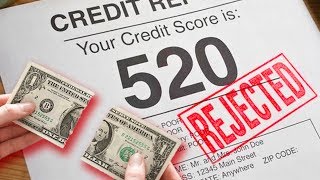
- Your credit score (roughly 300 to 850, with the best rates usually above 740) signals to lenders how likely you are to default, which determines whether you get a loan and at what interest rate.
- Credit history length matters, so opening a card early starts the clock sooner.
- Utilization rate (the share of your available credit you use) should stay low; a larger total limit lowers it for the same spending.
- On-time payments, a mix of credit types (cards, auto loans, leases, mortgages), and a limited number of recent inquiries (which affect the score for about 6 months) also count.
- Good debt, such as a mortgage or business loan that earns more than it costs, can be used to leverage money; bad debt is spending you can't afford.
Details Worth Noting
- Concrete instructions:
- Step 1: Go to a local bank and open a secured credit card, depositing about $300 to $500 as collateral to receive a card with an equal limit.
- Use the card for normal everyday expenses (small meals, gas, groceries), keep spending minimal, and pay the statement balance in full every month for about 4 to 6 months.
- Step 2: After building history, apply for an unsecured card; the speaker personally recommends the Capital One card or the Bank of America cash rewards card (cards he has used), and says the limit size doesn't matter.
- Step 3: After about a year of on-time full payments, apply for a charge card (no carried balance, no reported limit, so high spending doesn't raise utilization); the speaker personally uses and likes the American Express Gold card for its rewards.
- Continue adding cards and loan types over time, and consider credit card sign-up bonuses and credit card churning as more advanced steps once your score is strong.
- Set up automatic full payment each month so nothing is missed.
- Keep old cards open, even unused ones; if there's an annual fee, ask the issuer to downgrade you to a no-fee card instead of closing it.
- Check your score monthly (the speaker uses Credit Karma).
- Myths the speaker debunks: you don't need to pay interest or carry a balance to raise your score; checking your own score doesn't hurt it; having more cards generally helps by increasing available credit.
- Example of utilization: spending $3,000 on a $10,000 limit is 30% utilization, while the same spending on a $100,000 limit is 3%.
- A late payment stays on your credit report for 7 years.
- The speaker says that not having a credit card or credit history when buying real estate in 2011 and 2012, despite having cash, probably cost him over $500,000 in lost opportunity.
Bottom Line
Building credit is a low-cost, long-term habit: small, fully paid monthly charges across a few cards are enough to qualify you for better loans later.