digest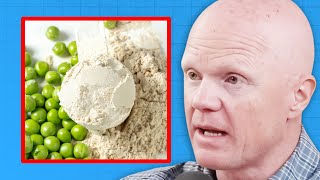
Short Summary
Main recommendation: Dr. Ben Bikman argues that humans are not meant to get protein from plants, and that animal protein is the better source for human physiology, even though he says plants can be a wonderful part of a diet. He supports this with bioavailability studies, anti-nutrient effects, and metal concentration concerns in plant protein products.
Key Points
- Bikman says that plant protein is inferior to animal protein on every metric he cites, with studies quantifying amino acid bioavailability and absorption.
- He argues that a modest amount of animal protein supplies every essential amino acid in a good ratio, while plant protein leaves people guessing whether they are getting enough.
- He says plant proteins contain anti-nutrients such as tannins, trypsin inhibitors, phytates, and oxalates, which inhibit digestive enzymes.
- He claims that concentrating peas or soybeans into protein powder concentrates metals too, and cites The Clean Label Project, which found plant proteins were the biggest offenders and some had potentially toxic metal levels.
- He is not convinced plant protein is better for the planet because of long-distance shipping and factory processing, but he says he is not an expert on planetary health.
Details Worth Noting
- Concrete instructions: The transcript gives no step-by-step protocol. Its only actionable advice is to consider a modest amount of animal protein for a complete amino acid profile and to be aware that plant protein powders may carry higher metal levels, so the viewer should weigh these points against their own dietary needs, ideally with a qualified professional.
- The metal concern is most relevant to concentrated plant protein products, since a single pea has only microscopic lead or arsenic, but concentrating a thousand peas or soybeans can concentrate those metals.
- The Clean Label Project is named as the third-party group that tested metals across various protein supplements.
- Bikman frames the "four pillars" of fasting, controlling carbs, prioritizing protein, and not fearing fat as a path to moving the needle on insulin resistance, which he says can usually resolve in weeks to months, perhaps, for people who follow them.
- He acknowledges the topic is sensitive and that people have many reasons for avoiding animal products.
Bottom Line
The video presents a strong, one-sided case against plant protein as a primary human protein source, based on the speaker's own reasoning and cited studies, so viewers should check the underlying research before drawing conclusions.