digest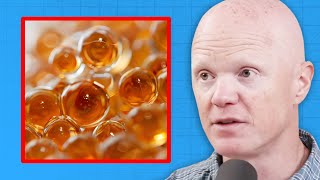
Short Summary
Main recommendation: Stimulate brown fat (brown adipose tissue) with cold exposure and keep insulin low while allowing ketones to rise, and reduce visceral fat by cutting fructose, especially from sugary drinks and fruit juice. According to Dr. Ben Bikman, brown fat burns fat and glucose to produce heat, and visceral fat (fat around the organs) drives more inflammation than subcutaneous fat (fat under the skin). The conversation also presents the waist-to-hip ratio as a rough home check on fat distribution.
Key Points
- Brown fat cells are packed with mitochondria and have a high metabolic rate, comparable to muscle cells, but they burn fat and glucose to make heat rather than to do physical work.
- White fat cells are almost entirely one lipid droplet and have the lowest metabolic rate of any cell type tested in Bikman's lab.
- Babies have a lot of brown fat, which helps them stay warm without shivering; by adulthood, brown fat is mostly limited to the thoracic cavity and the neck.
- In Bikman's lab study, high insulin slowed brown fat's metabolic rate and made it behave more like white fat, while elevated ketones pushed white fat toward brown-like behavior.
- Visceral fat has more immune cells, especially macrophages, which secrete pro-inflammatory proteins; more visceral fat means more inflammation and insulin resistance.
- In a human study cited by Bikman, a fructose drink increased visceral fat selectively compared with an isocaloric glucose drink.
Details Worth Noting
- Concrete instructions:
- Cold exposure: Bikman described it as a well-documented way to activate brown fat. He uses a sauna for 15 minutes after workouts, then an ice shower for about five minutes. He says this is not the same as full-body immersion but is the closest practical option for him.
- Insulin and ketones: keep insulin low and ketones up. Ketones can only rise when insulin is down.
- Fructose: drink less fructose by cutting sugary sodas and fruit juice. Bikman said he is not declaring war on whole fruit, because you would need to eat a great deal of fruit to get enough fructose to change visceral fat.
- Waist-to-hip ratio at home: measure the widest part of the belly around the belly button, then the widest part of the buttocks and hips, and divide belly by hips. Bikman recalled the cutoffs as roughly 0.9 for men and 0.7 for women, noting he didn't remember them exactly, and said a ratio above these suggests more fat is stored in the visceral space.
- Bikman noted that the home ratio is not perfect; MRI and DEXA scans are the clinical options.
- Bikman said some visceral fat is healthy because it helps filter pathogens from blood coming from the gut, so complete removal is not the goal.
- He said people who have more brown fat tend to be more resistant to weight gain and type 2 diabetes.
- Near the end, the transcript mentions four pillars: fasting, controlling carbs, prioritizing protein, and not fearing fat. The speaker says following them will move the needle and that insulin resistance will be gone, usually in weeks and months, perhaps. This claim is presented as the speaker's view, not as professional advice.
Bottom Line
Brown fat is a metabolically active tissue that can be encouraged with cold and low insulin, while reducing fructose intake is the transcript's main practical lever for cutting harmful visceral fat.