digest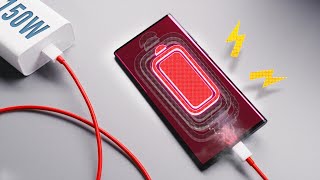
Short Summary
Main recommendation: Fast charging does not inherently ruin a phone's battery; the main battery enemy is heat, so the best practice is to use your phone normally and avoid extra heat. The video argues that modern fast-charging designs (such as split/parallel batteries, better cooling, and smarter power management) keep batteries within industry health standards, though long-term data for the newest ultra-fast chargers is still limited and mostly comes from manufacturers.
Key Points
- Batteries absorb energy fastest when nearly empty and slow down near full, so advertised peak wattages (like 120 W) are brief maximums, not sustained charging rates. A 65 W fast charger typically hits 65 W only for the first few minutes from a low battery, then tapers off and trickle charges after around 80%.
- Heat is the number one factor that degrades batteries faster than normal, and more charging wattage generally produces more heat.
- Manufacturers reduce heat through techniques like moving power management into the wall brick (OnePlus Warp Charge 30T), parallel charging across two smaller cells, and added cooling hardware such as heat shields, vapor chambers, and fans.
- The industry benchmark is 80% battery health after 800 charges, roughly two years of daily charging; Xiaomi claims its 120 W tech meets this, Apple claims 80% after just 500 cycles, and OPPO and OnePlus claim 80% after 1,600 cycles for their 150 W phone.
Details Worth Noting
- Concrete instructions: Avoid leaving your phone in direct sun, such as on a car dashboard, and avoid long periods of gaming while plugged in, since these add heat. Check your battery health on iPhone under Settings > Battery > Battery Health. If you want to see real-time charging wattage, a display cable can show how much power your phone accepts while charging (he mentions he'll link one, a minor self-promotional aside).
- Trade-offs of fast-charging designs include larger power bricks, thicker phones with more cooling, and slightly smaller overall battery capacity due to space needed for two cells and management hardware.
- Gallium nitride chargers can deliver the same power as silicon chargers at about half the size, such as a 65 W unit at half the size.
- Some phones offer pass-through charging, which powers the device during gaming without charging the battery, reducing battery stress. The ROG Phone 5 is cited as an example.
- Recent iPhones and Pixels learn your routine and charge to 80% first, then finish charging about an hour before your alarm, reducing time spent at full charge.
- The Galaxy Note 7 battery issue was attributed to a supplier's dimension error causing the battery to bend, not to fast charging or overheating.
Bottom Line
Fast charging is not an automatic battery killer, so you can use it with reasonable confidence, while keeping your phone cool and using built-in battery health features will do the most to preserve battery life.