digest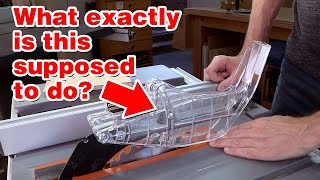
Short Summary
Main recommendation: Keep the blade guard in place if you are new to the table saw or already use one, but the creator, Steve of Woodworking for Mere Mortals, does not use a blade guard himself because it conflicts with his workflow and cuts. He insists that a riving knife is non-negotiable and the single most important table saw safety feature.
Key Points
- The speaker says a riving knife is, in his opinion, the most important table saw safety feature and should be in place for all cuts except when using dado blades; it greatly reduces kickback risk.
- The blade guard's main purpose, per the speaker, is preventing wood from falling onto a spinning blade, such as when reaching over the blade to grab a cut-off piece.
- A blade guard offers limited finger protection because the front of the blade remains exposed, though it serves as a visual reminder to keep hands away.
- The speaker avoids the guard mainly because it blocks use of a gripper push block, which he says gives him better control of the workpiece along the rip fence.
- The guard also obscures the cut, which the speaker dislikes when cutting to a line or nibbling boards to fit.
- The speaker says he only sees the guard as potentially useful for crosscuts with a miter gauge, which are the cuts least likely to need protection.
Details Worth Noting
Concrete instructions:
- Use a riving knife for every cut except when using dado blades. Never make a cut without it in place.
- Keep every safety feature the table saw came with, and always wear safety glasses.
- If you are brand new to the table saw, keep the blade guard installed.
- If you already use a blade guard, the speaker says not to remove it based on his video or opinions.
- If someone else uses your saw, make sure the blade guard is installed.
- Before each cut, visualize it, deciding how you will position your hands and body.
- Stand to the side of the blade when crosscutting with a miter gauge, keeping both hands on the gauge and not reaching over the blade.
- Consider aftermarket overhead blade guard systems if you have money; the speaker notes these are usually for stationary high-end saws and are mostly used for dust extraction.
- Remove the blade guard for thin pieces, resawing, non-through cuts such as dados and grooves, some beveled cuts, and when using jigs or fixtures like a crosscut or miter sled.
- The speaker did not provide specific dosages, amounts, or timings beyond the above.
Additional context:
- Of 50 large woodworking channels the speaker checked, only three regularly use a blade guard on their table saw.
- The speaker compares skipping the guard on crosscuts to not wearing a helmet while driving: it reduces risk, but with other safety procedures in place he considers it not worth it.
- He acknowledges his reasons are partly psychological and that the visibility argument is somewhat weak.
Bottom Line
The speaker avoids blade guards for his own workflow but refuses to call them non-negotiable, so beginners and anyone unsure should keep one installed while always relying on a riving knife and safe procedures.