 digest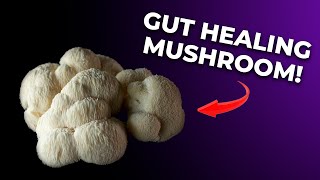
Short Summary
Main recommendation: Lion's mane mushroom is the guests' go-to mushroom for gut support, used to help rebalance gut microbiota, heal the gut lining, and support the gut-brain axis. They also describe it as useful for nerve-related conditions, though they stress that strong human research is still limited. Reishi is recommended as a complementary mushroom for nervous system balance, stress, sleep, and antioxidant support.
Key Points
- Lion's mane is said to do more than a probiotic or prebiotic: it is described as balancing gut bacteria, supporting healing of the gut lining, and helping heal the enteric nervous system as well as the peripheral and central nervous systems.
- The guests link irritated, thin gut linings ("leaky gut") and dysbiosis to brain-related problems, and cite the gut-brain connection as a hot topic.
- Lion's mane's active compounds, hericenones and erinacines, are said to stimulate nerve growth factor and chemicals linked to mood, and it may support myelination, the nerve coating lost in conditions like multiple sclerosis.
- One guest described a patient with a post-vaccine nerve injury who, in the guest's account, became largely symptom-free within two months after lion's mane was added to a broader protocol; the guest stressed there is no certainty it was the cause.
- One guest recounted a Crohn's disease patient who, in the guest's experience, reached remission about three months after quitting smoking and starting lion's mane powder and then a concentrated extract, while believing smoking cessation was likely the major factor.
- Reishi is described as a nervous system balancer with traditional use for sleep, stress, anxiety, depression, and pain, and as a potent antioxidant and anti-inflammatory.
Details Worth Noting
- Concrete instructions: Lion's mane is edible and can be bought at farmers' markets; the guest recommends trying it, describing it as sweet, subtle, soft-textured, and similar to vegan lobster. It can be taken as powder or as a concentrated extract. Reishi is presented as a preventative option for aging, inflammation, and oxidation. No doses, frequencies, or durations were stated in the transcript.
- Lion's mane looks like a white or slightly yellow, shaggy fungus with tiny filaments, growing on the sides of or beneath things; one English common name is bearded tooth mushroom.
- The guests explicitly caution that human research is limited, that clinicians use it based on mechanisms rather than strong evidence, and that the patient cases are anecdotal.
- Animal studies on hind leg nerve injuries were cited as showing peripheral nerve regeneration, and the guests call for more human studies.
- Reishi is described as useful for people living in cities, stressed, or breathing polluted air, and as a counterbalance to inflammation and oxidation.
Bottom Line
The guests present lion's mane as a promising gut and nervous system mushroom grounded in known mechanisms, while acknowledging that robust clinical evidence is still missing and that the patient stories are not proof.


