 digest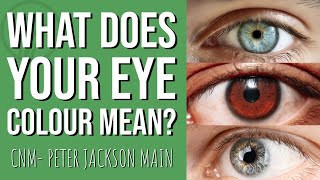
Short Summary
Main recommendation: Treat iris colour as a primary constitutional indicator in iridology, where the degree of pigmentation is taken to reflect a person's underlying constitutional type, which then guides health questions. The lecture groups eyes into three primary types (lymphatic, mixed biliary, and hematogenic) and presents this as the starting point for constitutional analysis. The method is presented as a classification framework rather than a tested diagnostic test.
Key Points
- Iris pigmentation is described as serving the same protective role against strong sunlight as skin pigmentation.
- Pigmentation is always in the yellow-brown-red spectrum, and the degree of pigmentation is treated as the main sign of constitution.
- Blue or blue-grey irises have little or no pigment; the blue colour comes from the pigmented epithelium, a midnight-blue layer behind the iris fibres.
- The lymphatic type is a blue iris with no pigmentation, linked to the lymph and lymph system.
- The mixed (biliary) type is a brown-grey or hazel iris, named for the liver and gallbladder, and linked to digestion.
- The hematogenic type is a fully pigmented dark brown iris with no visible fibre structure in the ciliary zone, linked to blood composition.
Details Worth Noting
- Concrete instructions: Look at the eye colour first to assign the primary constitutional type (blue or blue-grey = lymphatic; brown-grey or hazel = mixed/biliary; dark brown = hematogenic). Then ask relevant questions about the individual's health experience to continue the constitutional analysis. The speaker says the next lesson adds more detail, and no further steps are given in this transcript.
- The mixed type can range from quite pale to almost completely dark, so it covers a wide colour range.
- In the mixed iris, fibre structure is hard to see where pigment is densest but becomes visible toward the iris edge.
- The speaker frames the colour typology as a preview of a later lesson, so the full method is not covered here.
- The transcript presents these links (lymph, liver/gallbladder, blood) as stated classifications and does not provide evidence for them.
Bottom Line
Iris colour is presented here as a quick first step for sorting people into constitutional types, with each type tied to a body system, but the transcript does not provide evidence that these associations hold up.


